

Shoulder pain after surfing often develops gradually from repetitive paddling rather than a single injury. Thousands of paddle strokes, long sessions in the lineup, and years of repetitive overhead motion can place significant stress on the shoulder over time. What starts as mild soreness after surfing can eventually affect paddling strength, recovery, sleep, and overall performance in the water.
Whether you’re surfing near Belmar Beach, paddling around Shark River Inlet, or squeezing in dawn patrol sessions before work, shoulder pain can eventually interfere with the activity you enjoy most.
One of the most common causes is what many athletes call surfer’s shoulder. While it isn’t a formal medical diagnosis, the term describes a group of overuse conditions that frequently involve the rotator cuff, shoulder impingement, tendon irritation, and inflammation within the shoulder joint.
What’s Inside
- What surfer’s shoulder actually means
- Why paddling places so much stress on the shoulder
- Common causes of rotator cuff pain in surfers
- How to tell the difference between impingement and a tear
- Warning signs that deserve attention
- Common treatment options for active surfers
- When it may be time to see a shoulder specialist
What Is Surfer’s Shoulder?
Surfer’s shoulder is a term used to describe shoulder pain that develops from repetitive paddling and overhead movement. While surfers often think of it as one specific condition, several different issues can create similar symptoms.
The most common involve the rotator cuff, a group of muscles and tendons that help stabilize the shoulder while allowing it to move through a wide range of motion. Shoulder impingement, tendon irritation, inflammation, and even rotator cuff tears can all contribute to the pain surfers experience.
What makes a surfer’s shoulder unique is how gradually it tends to develop. Unlike an ankle sprain or a shoulder dislocation that happens in a single moment, symptoms often build slowly over time. A surfer may notice a little soreness after a long session, then slightly more discomfort the following week, before eventually realizing that the shoulder never fully recovers between sessions.
Because surfing demands so much repetitive motion, small problems can become bigger ones when they are repeatedly stressed in the water.
“Many surfers expect some shoulder soreness after a long session, especially during the summer when they’re spending more time in the water. What catches my attention is when someone notices changes in strength, endurance, or recovery. Those changes often tell us more than pain alone.”

Why Does My Shoulder Hurt After Surfing?
Every wave begins with paddling, and that’s exactly why shoulder pain is so common among surfers.
A typical surf session can involve hundreds of shoulder rotations. During every paddle stroke, the shoulder moves through elevation, rotation, and forward reach while the rotator cuff works continuously to stabilize the joint. Most surfers never think about these muscles until something starts hurting.
Along the Jersey Shore, local conditions can increase these demands even further. Strong currents around Shark River Inlet often require longer paddle-outs. Summer crowds frequently mean more repositioning, more sprint paddling, and more time fighting for waves. Over the course of an entire season, those additional demands can add up quickly.
Many surfers first notice symptoms after they leave the water. Loading a board onto the car becomes uncomfortable. Reaching overhead feels awkward. Some develop a deep ache later that evening, while others wake up the next morning wondering why their shoulder suddenly feels stiff.
Those subtle changes often represent the earliest signs that the shoulder is struggling to keep up with the demands being placed on it.
“The surfers I see most often aren’t usually dealing with one major injury. They’re dealing with the cumulative effect of repeated paddling over time. The shoulder is incredibly resilient, but eventually even healthy tissue can become irritated when the workload continues to increase.”
— Dr. Stacey Gallacher, MD, FAAOS
What Causes Rotator Cuff Pain in Surfers?
The rotator cuff is a group of four muscles and tendons that stabilize the shoulder during paddling. Repetitive overhead motion can place significant stress on these structures, particularly when surf frequency or intensity increases.
Common Contributors to Surfer’s Shoulder
- Repetitive paddling volume
- Limited shoulder mobility
- Previous shoulder injuries
- Muscle imbalances around the shoulder blade
- Reduced recovery between sessions
How Can You Tell the Difference Between Shoulder Impingement and a Rotator Cuff Tear?
Many surfers use these terms interchangeably, but they describe different conditions.
Shoulder impingement occurs when tissues inside the shoulder become compressed during movement. Rotator cuff tears involve damage to one or more of the tendons responsible for stabilizing and moving the shoulder.
The symptoms can overlap significantly, which is why diagnosis isn’t always straightforward.
| Shoulder Impingement | Rotator Cuff Tear |
| Pinching sensation during movement | Noticeable weakness |
| Pain reaching overhead | Difficulty lifting the arm |
| Symptoms often tied to activity | Symptoms may continue at rest |
| May improve with position changes | Can interfere with sleep |
| Irritation of surrounding tissues | Structural tendon damage |
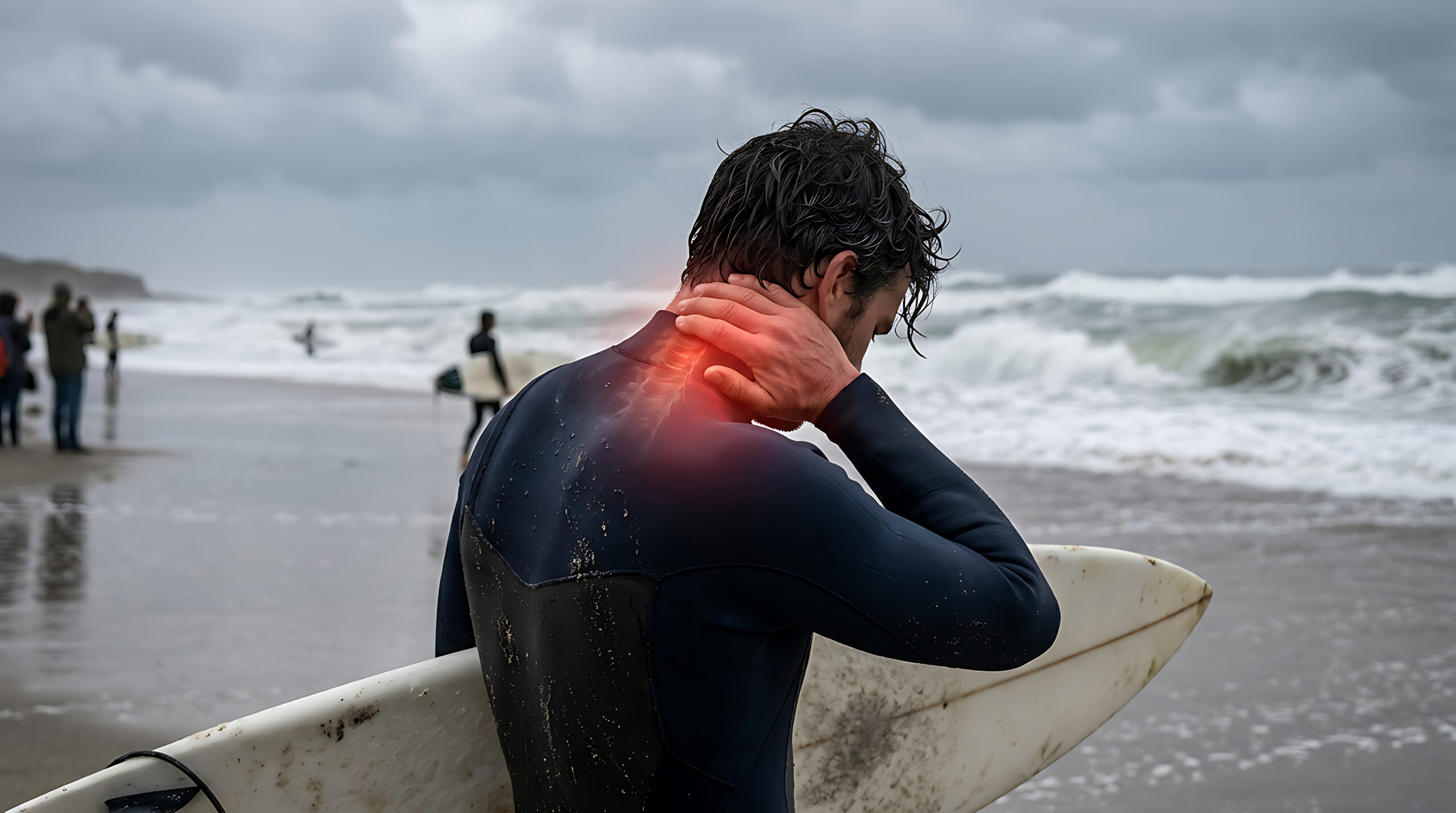
What Are the Warning Signs That Shoulder Pain Is Becoming More Serious?
Not every sore shoulder requires treatment. Most surfers experience occasional discomfort, especially after a long day in the water. Certain symptoms, however, deserve closer attention.
Signs That Should Not Be Ignored
- Pain that regularly interrupts sleep
- Progressive weakness during paddling
- Difficulty lifting or carrying a surfboard
- Loss of shoulder motion
Many surfers try to push through these symptoms, assuming they simply need more rest. While rest is sometimes helpful, persistent weakness or loss of function can indicate something more significant than routine soreness.
“One of the biggest warning signs I hear from surfers isn’t necessarily pain—it’s loss of paddling power. Many people tell me they can still get in the water, but they don’t feel as strong paddling into waves or getting through the lineup. When strength and endurance begin changing, even before pain becomes severe, it’s worth finding out what’s happening inside the shoulder.”
What Treatment Options Are Available for Surfer‘s Shoulder?
Many shoulder conditions respond well to treatment once the underlying cause is identified. The best treatment depends on the diagnosis, severity of symptoms, activity level, and long-term goals of the individual surfer.
Common Treatment Approaches
| Treatment | Purpose |
| Physical Therapy | Improve strength, mobility, and movement patterns |
| Activity Modification | Reduce stress on irritated tissues |
| Anti-Inflammatory Management | Address inflammation when appropriate |
| Ultrasound-Guided Injections | Target specific structures within the shoulder |
| Surgical Treatment | Considered when structural damage requires additional intervention |
Treatment often includes physical therapy, activity modification, and other non-surgical approaches based on the underlying diagnosis and individual goals.
Can Surfer’s Shoulder Heal Without Surgery?
Many surfers assume shoulder pain automatically leads to surgery, but that is often not the case.
A significant number of shoulder conditions improve through non-surgical treatment. Tendon irritation, inflammation, and certain forms of shoulder impingement frequently respond well to conservative management when addressed appropriately.
Treatment depends on the underlying cause. Shoulder soreness related to overuse is managed differently than conditions such as rotator cuff tears, instability, arthritis, or labral injuries.
The goal is not simply reducing pain. The goal is restoring shoulder function so patients can comfortably return to the activities that matter most to them, whether that means surfing, paddle boarding, working out, or staying active with family and friends.
“One of the most rewarding parts of treating active patients is helping them get back to the activities they enjoy. The path looks different for everyone, which is why understanding the individual and their goals is such an important part of treatment.”
— Dr. Stacey Gallacher, MD, FAAOS
When Should You See a Shoulder Specialist?
Many surfers wait longer than they should before seeking help.
Unfortunately, continuing to paddle through a problem without understanding its cause can sometimes allow symptoms to worsen over time.
If shoulder pain begins affecting performance in the water, limits daily activities, interrupts sleep, or causes noticeable weakness, it may be time for an evaluation.
A comprehensive shoulder assessment can help determine whether symptoms involve the rotator cuff, shoulder impingement, instability, arthritis, a labral injury, or another condition entirely.
Early evaluation often provides greater clarity, more treatment options, and a better understanding of how to move forward.
Frequently Asked Questions About Surfer’s Shoulder
What is surfer’s shoulder?
Surfer’s shoulder is a term used to describe shoulder pain related to repetitive paddling and overhead movement. Rotator cuff irritation, tendon inflammation, shoulder impingement, and other overuse conditions are among the most common contributors.
How do you heal surfer’s shoulder?
Treatment depends on the underlying diagnosis. Many patients improve with physical therapy, activity modification, and other non-surgical treatments. More significant injuries may require additional intervention depending on the severity of the condition.
What are two warning signs of a rotator cuff tear?
Two important warning signs are weakness and pain that interrupts sleep. Surfers often notice they no longer have the same paddling power or endurance they once had. Others develop discomfort that makes it difficult to sleep on the affected shoulder. While these symptoms do not automatically indicate a tear, they deserve evaluation by a qualified shoulder specialist.
How do you tell if it’s shoulder impingement or a rotator cuff tear?
The symptoms often overlap. Weakness tends to be more common with rotator cuff tears, while shoulder impingement frequently produces a pinching sensation during movement. A physical examination and diagnostic imaging, when appropriate, help determine the exact cause.
Can surfing cause a rotator cuff tear?
Repeated overhead motion can contribute to wear and tear within the rotator cuff over time. Some tears develop gradually, while others occur following a specific injury. The risk varies based on age, activity level, previous injuries, and overall shoulder health.
Why does my shoulder hurt more after surfing than during surfing?
Inflammation and tissue irritation often become more noticeable after activity ends. Many surfers do not fully appreciate their symptoms until they leave the water and the shoulder begins to cool down and recover.
Does paddling make rotator cuff injuries worse?
Paddling places repetitive stress on the rotator cuff. Depending on the underlying injury, continued paddling may aggravate symptoms. The effect varies based on the diagnosis, severity of the condition, and overall health of the shoulder.
Can surfer’s shoulder heal without surgery?
Many shoulder conditions improve without surgery. The most appropriate treatment depends on the specific diagnosis, severity of symptoms, activity level, and individual goals.
 About Dr. Stacey Gallacher

Stacey Gallacher, MD, FAAOS is a Board-Certified Orthopedic Surgeon and fellowship-trained shoulder and elbow specialist. She treats rotator cuff injuries, shoulder instability, sports-related shoulder conditions, and other upper extremity disorders affecting active adults and athletes.
As a former Division I collegiate athlete who remains active through surfing, paddle boarding, cycling, and yoga, Dr. Gallacher understands firsthand how frustrating it can be when pain begins interfering with an active lifestyle. Her approach focuses on helping patients understand their condition, explore appropriate treatment options, and work toward returning to the activities they enjoy.
Stay Ready for the Next Session
If shoulder pain is affecting your surfing, daily activities, or sleep, an evaluation can help identify the cause and discuss available treatment options.
Persistent pain, weakness, loss of motion, or changes in paddling performance should not be ignored. Understanding the cause of those symptoms is often the first step toward improving comfort and protecting long-term shoulder health.
Dr. Stacey Gallacher specializes in diagnosing and treating shoulder conditions affecting surfers, athletes, and active adults throughout Monmouth County.
To learn more about available treatment options, contact the team at AOSMI at 732-720-2555 or request an appointment.