

Quick Answer
Soccer players get injured because the sport combines sprinting, cutting, jumping, kicking, and physical contact. These movements place repeated stress on the knees, ankles, hips, muscles, and tendons. While some injuries occur during collisions, many happen during routine soccer movements such as changing direction, landing from a jump, or accelerating suddenly.
Key Takeaways
- Knee and ankle injuries are among the most common soccer injuries.
- Many injuries occur without player-to-player contact.
- Fatigue can affect movement mechanics and increase injury risk.
- Youth athletes may face different injury patterns than adults.
Persistent pain, swelling, or instability may warrant evaluation. Soccer is played by millions of athletes around the world, from young children kicking a ball for the first time to professionals competing on the sport’s biggest stages. Soccer is one of the most physically demanding sports in the world. Players sprint, change direction without warning, jump, land, tackle, and react to constantly changing situations throughout a match.
Those demands are part of what makes soccer exciting. They are also part of the reason injuries occur at every level of play.
Understanding why soccer injuries happen can help athletes recognize risk factors, identify concerning symptoms, and make informed decisions about when an injury deserves further evaluation.
Why Soccer Injuries Are So Common
Soccer places substantial demands on the lower body, helping explain why knee, ankle, and muscle injuries are so common. Repeated sprinting, cutting, jumping, and landing place stress on the joints, muscles, and connective tissues involved in movement.
A recent analysis of more than 500,000 youth soccer injuries found that the ankle accounted for approximately 39% of lower-extremity injuries and the knee accounted for approximately 29%. (PubMed Central)

Why Do Some Soccer Players Get Injured More Often Than Others?
Several factors can influence injury risk, including:
- Strength
- Conditioning
- Recovery habits
- Training volume
- Fatigue
- Previous injuries
- Playing surface
Small differences in these areas can affect how forces move through the joints and muscles during activity.
Fatigue can affect balance, coordination, and movement control, potentially increasing stress on the lower extremities.
Previous injuries can also play a role. Even after symptoms improve, athletes sometimes develop compensations that place additional strain on nearby structures.
Are Most Soccer Injuries Contact or Non-Contact?
Many people assume soccer injuries happen only during collisions. However, a large percentage of knee, ankle, and muscle injuries occur without direct contact.
Non-contact injuries often happen during:
- Cutting
- Pivoting
- Landing
- Sudden acceleration
- Rapid deceleration
Contact injuries are more commonly associated with tackles, collisions, and challenges for possession.
Common Orthopedic Injuries in Soccer
Knee injuries often involve structures such as the ACL, meniscus, and MCL. These injuries may occur during cutting, pivoting, landing, or contact situations.
| Body Area | Common Injuries |
| Knee |
ACL tears, meniscus injuries, MCL sprains |
| Ankle |
Ankle sprains, high ankle sprains |
| Foot |
Fifth metatarsal fractures, stress injuries |
| Thigh | Hamstring strains, quadriceps injuries |
| Groin | Adductor strains |
| Lower Leg | Calf strains |
Muscle Injuries Often Develop During High-Speed Play
Muscle injuries are common in soccer, particularly during high-speed activity.
Common Soccer Muscle Injuries
- Hamstring strains
- Groin strains
- Calf strains
- Quadriceps injuries
Unlike some traumatic injuries, muscle injuries do not always appear suddenly. In certain situations, symptoms begin as tightness or mild discomfort before becoming more noticeable over time.

Young Soccer Players Face Different Injury Risks
| Age Group | Common Concerns |
| Youth Athletes | Growth plate irritation, Sever’s disease, Osgood-Schlatter disease |
| High School Athletes | ACL injuries, ankle sprains, muscle strains |
| Adults | Meniscus injuries, tendon injuries, chronic overuse conditions |
During growth spurts, bones can lengthen faster than muscles and tendons adapt. This can create temporary imbalances that increase stress on developing structures.
As a result, orthopedic specialists sometimes evaluate conditions such as Osgood-Schlatter disease, Sever’s disease, growth plate irritation, and other overuse-related concerns in young athletes.
Parents often assume recurring discomfort is simply part of growing up. While soreness can occur after activity, pain that repeatedly affects participation, movement, or performance deserves attention.
Can Soccer Injuries Cause Pain the Next Day?
Delayed Symptoms May Include
- Pain
- Swelling
- Stiffness
- Reduced mobility
- Difficulty bearing weight
Adrenaline and the intensity of competition can sometimes make symptoms less noticeable during a game. As the body’s inflammatory response develops over the following hours, discomfort may become easier to recognize.
Delayed symptoms are commonly reported after collisions, awkward landings, sudden twists, and overuse-related injuries. While some discomfort may reflect normal post-exercise soreness, worsening symptoms can indicate an injury that deserves further assessment.
When Is Soccer Pain More Than Normal Soreness?
Most soccer players expect to feel sore after a demanding game or tournament. The challenge is knowing when discomfort moves beyond normal recovery.
Symptoms That Deserve Attention
- Significant swelling
- Difficulty bearing weight
- Joint instability
- Catching or locking sensations
- Persistent pain
- Reduced range of motion
- Symptoms that continue to worsen
These signs do not automatically indicate a serious injury, but they can suggest that further evaluation is appropriate.
What Happens During an Orthopedic Evaluation?
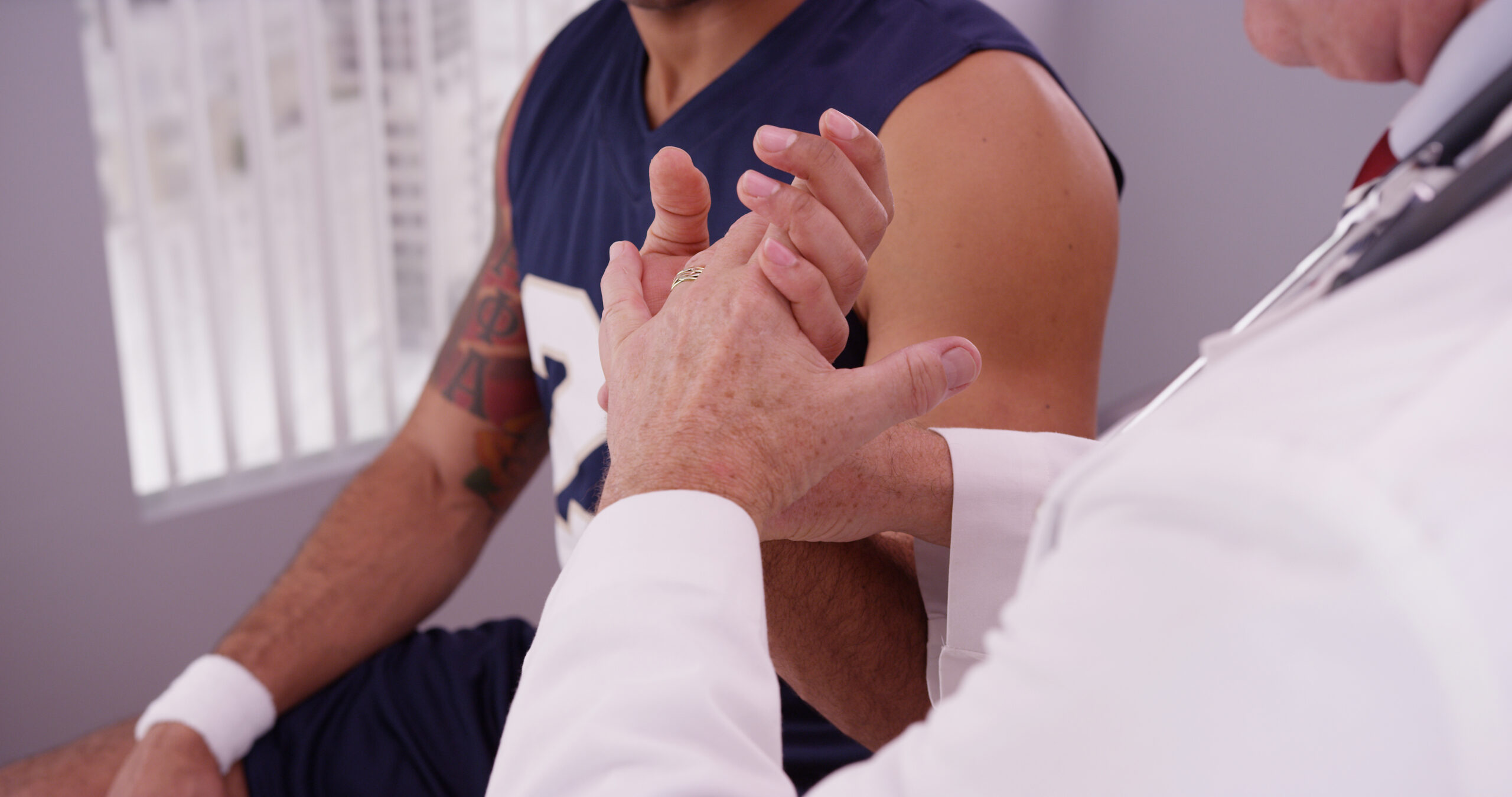
Evaluation typically includes a discussion of symptoms, a physical examination, and imaging studies when appropriate. The goal is to better understand the injury and determine the most appropriate next steps.
Can Soccer Injuries Be Prevented?
Strength training, mobility work, balance exercises, conditioning, and structured warm-up routines can help athletes move more efficiently and respond to the demands of competition.
One of the most researched injury-prevention programs in soccer is FIFA 11+. Studies have shown that structured warm-up programs can improve movement control and reduce the risk of certain lower-extremity injuries.
For recreational athletes in particular, consistent preparation is important. Many players participate in games regularly but spend far less time training between matches.
Frequently Asked Questions
Why do soccer players get injured so often?
Soccer combines speed, endurance, rapid directional changes, physical contact, and repetitive lower-body loading. Together, these demands place stress on the knees, ankles, muscles, and connective tissues, contributing to the injury patterns commonly seen in the sport. Fatigue, previous injuries, training volume, and movement mechanics can also influence injury risk.
What are the most common orthopedic injuries in soccer?
Some of the most commonly evaluated orthopedic injuries in soccer include ankle sprains, ACL injuries, meniscus tears, MCL sprains, hamstring strains, groin strains, calf injuries, and certain foot fractures. The exact injury pattern can vary based on age, position, level of competition, and style of play. While knee injuries often receive the most attention, orthopedic specialists frequently evaluate conditions affecting the entire lower body.
When should a soccer player see an orthopedic specialist?
Evaluation may be helpful when symptoms persist, continue to worsen, interfere with activity, or affect normal movement. Swelling, instability, difficulty bearing weight, limited range of motion, and recurring pain are common reasons athletes seek orthopedic care. An evaluation can help identify the structures involved and determine whether additional testing or treatment is appropriate.
Staying in the Game Starts With Understanding the Risks
Soccer places unique demands on the body, and injuries can affect much more than athletic performance. Knee pain, ankle instability, muscle strains, and other orthopedic conditions can interfere with work, exercise, daily activities, and long-term participation in the sports you enjoy.
If symptoms are limiting your ability to stay active, AOSMI provides orthopedic and sports medicine care for athletes experiencing soccer-related injuries. To learn more, call 732-720-2555 or Request an Appointment online.
This article is intended for educational purposes only and should not be considered medical advice. Individual symptoms, injuries, and recovery experiences can vary. Consult a qualified healthcare professional regarding your specific condition.