

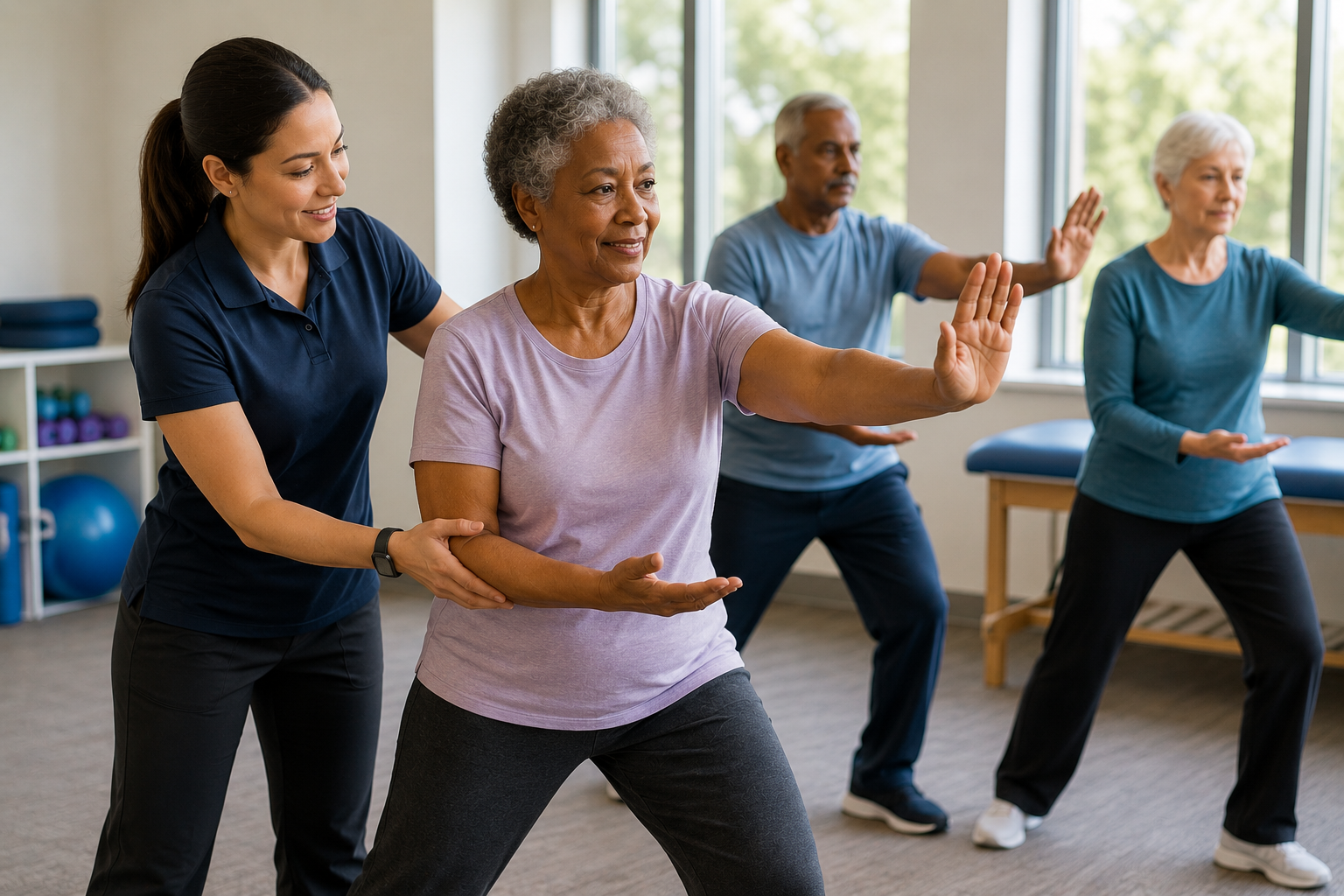
For centuries, Tai Chi was practiced as a martial art. Its slow, flowing movements were designed to improve control, coordination, and body awareness. Today, those same qualities have made Tai Chi an increasingly recognized tool in physical therapy.
As people remain active later in life, healthcare professionals continue looking for ways to support mobility, balance, and overall function. Tai Chi has become part of that conversation because it combines gentle movement with posture awareness, controlled weight shifting, and balance training. Unlike many forms of exercise, it places very little stress on the joints while still encouraging movement.
This is one reason Tai Chi is being incorporated into some rehabilitation programs. Research has explored its role in supporting individuals with osteoarthritis, balance concerns, fall risk, mobility limitations, and other conditions that can affect daily movement. Physical therapists sometimes incorporate Tai Chi principles and movements when they align with a patient’s goals and treatment plan.
The growing interest in Tai Chi reflects something many people experience as they age: changes in how they move and feel during everyday activities. Sometimes these challenges appear as joint stiffness. Other times they show up as reduced confidence when walking, navigating stairs, or moving across uneven surfaces. Understanding how Tai Chi fits into physical therapy begins with recognizing these common challenges.
What You’ll Learn in This Article
- Why physical therapists use Tai Chi
- How Tai Chi can support balance and mobility
- Why People With Arthritis Are Exploring Tai Chi
- Why Tai Chi is studied for fall prevention
- How Tai Chi fits into modern rehabilitation programs
- What makes Sun Style Tai Chi unique
Why Physical Therapists Use Tai Chi
Most people do not think about balance until something changes. Those changes often appear gradually over time. The morning stiffness lasts a little longer. A walk around the neighborhood feels more tiring than it once did. Stepping off a curb or navigating uneven ground requires a bit more attention.
These experiences can be linked to many different factors, including arthritis, previous injuries, balance disorders, and changes in activity levels. As mobility changes, people often become more cautious about movement, which can make it harder to stay active and engaged in the activities they enjoy.
Physical therapists often focus on improving movement quality rather than simply treating a single symptom. Balance, posture, coordination, and body awareness all play an important role in how people move throughout the day.
Tai Chi naturally incorporates many of these elements. Its slow, controlled movements encourage participants to focus on posture, movement patterns, and weight distribution while remaining active in a low-impact environment.
Conditions Tai Chi Principles Can Treat
While Tai Chi is not a treatment itself, physical therapists may incorporate Tai Chi-based movement principles when working with patients experiencing balance concerns, arthritis-related stiffness, mobility limitations, and other movement challenges.
| Condition | What Physical Therapists Often Focus On | Tai Chi Movement Principles |
| Osteoarthritis | Improving joint mobility, reducing stiffness, and helping patients stay active without high-impact exercise | Slow weight shifting, controlled knee and hip movement, and gentle transitions between positions. Sun Style Tai Chi is often discussed because it uses higher stances that place less stress on the joints. |
| Balance | Improving stability during walking, turning, and changing directions | Standing weight-transfer exercises, single-leg balance progressions, posture awareness, and coordinated arm and leg movements that challenge balance in a controlled way. |
| Fall Risk | Building confidence with movement and improving reactions to changes in position | Tai Chi sequences that encourage controlled stepping, directional changes, and body awareness while practicing safe movement patterns. |
| Vestibular Conditions | Supporting balance and movement confidence in people experiencing dizziness or motion sensitivity | Slow head turns, visual tracking, posture training, and controlled movement patterns often incorporated alongside vestibular rehabilitation programs. |
| Recovery After Injury | Restoring coordination, movement quality, and confidence after an injury | Gradual movement progressions that focus on posture, weight distribution, and smooth transitions between movements rather than speed or intensity. |
| Healthy Aging | Maintaining mobility, flexibility, balance, and overall function over time | Full-body movement sequences that combine balance, posture, flexibility, coordination, and mindful movement into one activity. |
The Connection Between Tai Chi and Arthritis
Arthritis affects millions of adults and is one of the most common reasons people seek care for joint pain and stiffness.
Many individuals living with arthritis want to stay active but struggle to find forms of exercise that feel comfortable for their joints. Activities that involve repetitive impact can sometimes feel intimidating, especially when knees, hips, or ankles are already stiff.
Tai Chi approaches physical activity differently than many traditional exercise programs. Rather than focusing on speed or intensity, Tai Chi emphasizes controlled movement. Participants move gradually from one position to another while maintaining posture and balance. This allows movement to remain gentle while still encouraging mobility and coordination.
Research has found improvements in physical function and pain scores among some individuals with knee osteoarthritis who participated in Tai Chi programs, contributing to its growing use in rehabilitation and wellness settings.
Why Tai Chi Is Often Associated With Fall Prevention

Falls are a common concern for individuals who want to maintain their independence, confidence, and mobility as they age.
Tai Chi has been studied extensively in this area because many movements require participants to shift weight, maintain posture, and move with control. These skills are closely connected to balance and body awareness.
Researchers have reported reductions in fall risk among some populations participating in structured Tai Chi programs. While individual experiences vary, these findings have helped increase interest in Tai Chi as a movement-based option within broader fall prevention strategies.
What Makes Sun Style Tai Chi Different?
Several styles of Tai Chi exist, but Sun Style Tai Chi is often discussed in rehabilitation settings.
This style uses smaller movements, higher standing positions, and smooth transitions between steps. Because it places less demand on the joints than some traditional forms, it is often used for individuals experiencing mobility limitations or joint concerns.
The focus remains on movement quality, coordination, posture, and balance rather than athletic performance.
Tai Chi Is About More Than Exercise
One reason Tai Chi continues to attract attention within healthcare is that it blends movement with awareness.
Many forms of exercise focus on moving faster, lifting more weight, or increasing intensity. Tai Chi focuses instead on movement quality, posture, coordination, and control. Each movement encourages attention to posture, balance, coordination, and control.
For physical therapists, these qualities are often important components of rehabilitation programs designed to support mobility and function.
This does not mean Tai Chi is appropriate for every individual or every condition. Instead, it represents one of many tools physical therapists can incorporate into a comprehensive treatment plan when it aligns with a patient’s needs and goals.
Frequently Asked Questions
Is Tai Chi considered physical therapy?
Tai Chi itself is not physical therapy. However, physical therapists may incorporate Tai Chi-based movements and principles into rehabilitation programs to help support balance, mobility, coordination, and overall function. When appropriate, these movements can be integrated into a personalized treatment plan based on a patient’s needs and goals.
Can Tai Chi help with arthritis?
Yes, Tai Chi may help some individuals with osteoarthritis by supporting mobility, balance, and physical function. Research has explored its role in arthritis management, and its slow, low-impact movements are often well tolerated by people looking to stay active despite joint stiffness.
Why is Tai Chi used for balance training?
Tai Chi is often used for balance training because it encourages controlled movement, posture awareness, and weight shifting. These skills help people practice stability and coordination while moving in a slow, structured, and low-impact way.
What is Sun Style Tai Chi?
Sun Style Tai Chi is a form of Tai Chi that uses smaller movements, higher stances, and smooth transitions between positions. Because it places less stress on the joints than some traditional styles, it is often discussed in rehabilitation and mobility-focused exercise programs.
Is Tai Chi only for older adults?
No. People of all ages practice Tai Chi for fitness, flexibility, coordination, and overall wellness. However, it is commonly discussed in healthcare settings because of its potential role in supporting balance, mobility, and healthy aging.

Exploring Movement Options That Support Mobility
For many people, staying active is less about athletic performance and more about maintaining independence, confidence, and quality of life. Movement needs change throughout life. For some people, that means finding ways to stay active despite arthritis. For others, it means addressing balance concerns, recovering from an injury, or maintaining mobility as they age.
Tai Chi has gained attention in physical therapy because it combines movement, coordination, posture, and balance in a low-impact format. As research continues to explore its applications, Tai Chi remains one of several movement-based approaches physical therapists use when addressing balance concerns, mobility limitations, and arthritis-related challenges.
To learn more about physical therapy services at AOSMI, call 732-720-2566 or Request an Appointment.