

Quick Answer
One week your child finishes every track practice without a problem. The next week, they’re complaining that their shins hurt. At first, the soreness only shows up after practice. Over time, the pain may start showing up earlier during workouts or last longer afterward. Those changes can provide important clues about what’s causing the pain.
At a Glance
- Shin splints often develop when training increases faster than the lower legs can comfortably adapt.
- Pain that keeps coming back, changes running form, or starts limiting practice or everyday activities deserves attention.
- Shin pain isn’t always the same. Understanding whether it’s normal soreness, shin splints, or another condition helps guide the next steps.
- Families in Freehold, Manalapan, Belmar, Monroe, and nearby communities have access to AOSMI physical therapy for youth running and lower-leg pain concerns.
Why Young Track Athletes Get Shin Splints
Shin splints, also called medial tibial stress syndrome, are one of the most common overuse injuries in young runners. In simple terms, the muscles, tendons, and tissues around the shin bone become irritated from repeated impact.
This often happens early in the season, after summer conditioning, or when training suddenly becomes more demanding. More frequent practices, harder workouts, hills, and extra mileage all increase stress on the lower leg. Even healthy legs sometimes need time to adapt.
Did You Know?
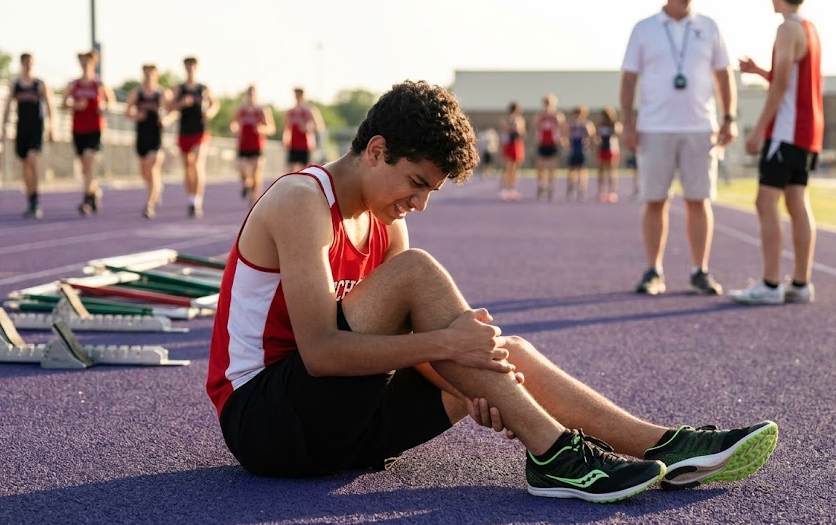
Young runners often develop shin splints early in the season—not because they’re out of shape, but because their training increases faster than their lower legs have time to adapt.
What Shin Splints Feel Like During Track Season
Shin splints often feel like an ache or soreness along the inner edge of the shin bone. At first, the pain may show up when practice begins, ease as the athlete warms up, and then return afterward. If symptoms progress, pain may appear sooner, last longer, or affect walking and daily movement.
Parents may notice that their child changes running form, avoids sprinting, complains after practice, or asks to skip events that used to feel manageable.
Sometimes the biggest clue isn’t what your child says—it’s what you see. A runner who suddenly shortens their stride or seems hesitant during practice may be trying to protect a painful shin without realizing it. Those changes suggest the pain is beginning to interfere with running, not just cause temporary soreness.
Shin Splints, Normal Soreness, or a Stress Injury?
Not every sore shin is caused by the same problem. One of the most common questions parents ask is, “How do I know if it’s just soreness from a tough workout?” The answer often comes down to the pattern of pain rather than the amount of pain. Some discomfort is simply part of a hard workout, while other patterns of pain deserve closer attention. Looking at when the pain starts, where it hurts, and how long it lasts helps tell the difference.
| Symptom Pattern | Often Associated With | Why It Matters |
| General muscle soreness in both legs after a hard practice | Training fatigue or delayed soreness | Soreness that keeps coming back or changes the way your child runs deserves closer attention because it may be more than normal training fatigue. |
| Aching along the inner shin that worsens with running | Possible shin splints | Running mechanics or training habits can sometimes contribute to ongoing shin pain. |
| Sharp, pinpoint pain in one area of the shin | Possible stress injury or another localized issue | A medical evaluation may be needed to rule out conditions that require different management. |
| Pain that changes gait or causes limping | Activity-limiting lower-leg pain | A young athlete should not have to compensate through practice or daily walking. |
| Pain with swelling, severe tenderness, or worsening symptoms | Symptoms that need closer assessment | These symptoms deserve prompt medical attention to determine the safest next steps. |
When Should Your Child’s Shin Pain Be Evaluated?
If your child’s shin pain isn’t improving, changes the way they run, or starts limiting practice or everyday activities, it’s important to understand what’s contributing to the pain.
Not every sore shin is an injury. The goal is to understand why the pain is happening and whether a few changes now can help prevent a more frustrating setback later.
How Physical Therapy Can Help
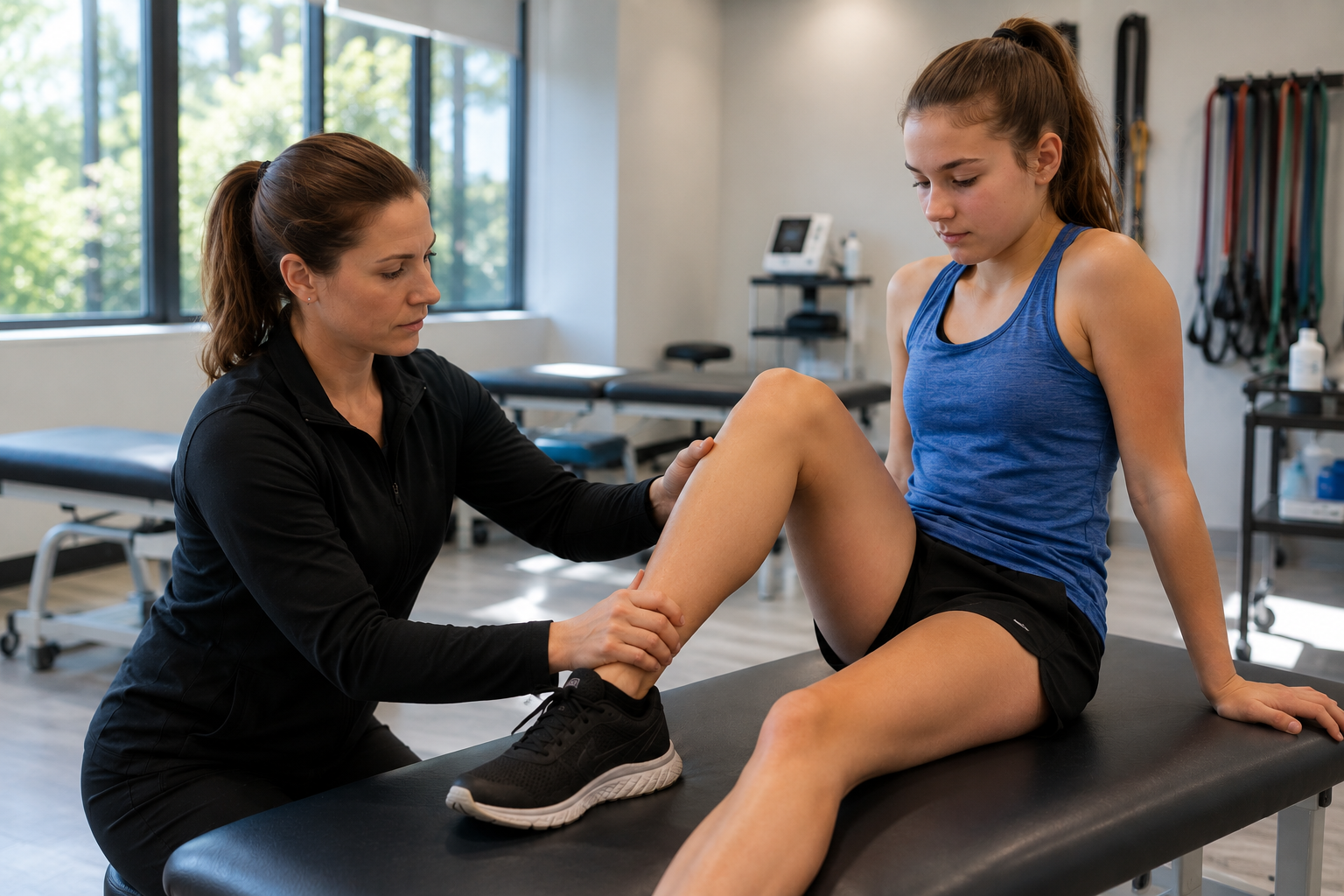
Many parents are surprised to learn that physical therapy involves much more than exercises. In reality, the first step is understanding why the pain developed in the first place. A physical therapist starts by watching how your child runs, looks for movement or training habits that may be placing extra stress on the shin, and develops a plan based on your child’s symptoms and goals.
No two runners develop shin pain for exactly the same reason, so treatment is based on the individual’s symptoms, goals, and training demands. One runner may need a simple training adjustment, while another may benefit from improving strength, movement, or recovery before returning to full activity.
As symptoms improve, physical therapy can also help guide a gradual return to running. If the pain suggests something more than shin splints, additional evaluation or care may be recommended.
Track Season in Freehold, Manalapan, Belmar, and Monroe
Freehold, Manalapan, Belmar, and Monroe all have active youth running communities through school track programs, recreation leagues, and seasonal conditioning. Freehold Township and Monroe Township offer youth track and field programs, Manalapan athletes participate in local school and recreation running programs, and Belmar’s coastal roads, parks, and nearby running routes make it a popular area for outdoor training. As participation increases across these communities, so does the potential for overuse injuries such as shin splints.
More time on the track also means young runners have more opportunities to develop overuse injuries if training increases too quickly.
What If the Shin Pain Keeps Coming Back?
Recurring shin pain shouldn’t be treated as something every runner simply has to push through. One of the biggest mistakes young runners make is assuming they’ll simply “run through it.”
While soreness after a hard workout can be normal, recurring pain is your body’s way of saying something needs attention. The athlete may be returning to impact too quickly, training may have increased too fast, or another condition may need to be considered.
Depending on what’s contributing to the pain, the next steps vary from one athlete to another. Catching recurring shin pain early can help keep a small problem from becoming a bigger setback later in the season.
Key Takeaways
- Shin splints in youth track athletes often develop when training load increases faster than the lower leg can adapt.
- Pain that keeps coming back, changes the way your child runs, or starts limiting activity shouldn’t be ignored.
- Physical therapy helps identify movement and training factors that may be contributing to shin pain while supporting a safe return to running when appropriate.
- Families in Freehold, Manalapan, Belmar, and Monroe have local AOSMI physical therapy access for youth running and lower-leg pain concerns.
Frequently Asked Questions
Are shin splints common in youth track athletes?
Yes. Shin splints are common in athletes who run and jump, including track athletes. They often appear when training increases quickly, surfaces change, or the lower leg is not adapting well to repeated impact.
Can my child keep running with shin splints?
A child should not keep running through worsening or activity-limiting shin pain without guidance. A clinician can help determine whether your child should temporarily reduce activity and when it’s appropriate to return to running.
How can physical therapy help shin splints?
Physical therapy helps identify movement, strength, flexibility, and training factors that may be contributing to shin pain. The treatment plan is tailored to the athlete’s symptoms, goals, and readiness to return to running.
How do I know if shin pain is a stress fracture?
You cannot confirm a stress fracture by symptoms alone. Sharp, focal pain, worsening pain, pain with walking, swelling, or pain that does not improve should be assessed by a clinician to determine whether imaging or other medical management is needed.
Where can youth athletes get shin splints evaluation near Freehold, Manalapan, Belmar, or Monroe?
AOSMI offers physical therapy and musculoskeletal care for patients in Freehold, Manalapan, Belmar, Monroe, and nearby communities. Families can request an appointment to discuss shin pain, running-related symptoms, and appropriate next steps.
 Next Steps for Shin Pain in Freehold, Manalapan, Belmar, and Monroe
If your child’s shin pain isn’t improving, keeps coming back, or starts affecting practice or everyday activities, scheduling an appointment can help identify what’s contributing to the pain and discuss the next steps that make the most sense for your child.
To request an appointment, contact AOSMI online or call the Physical Therapy Department at 732-720-2566. For physician scheduling, call 732-720-2555.
*This blog is for educational purposes only and should not replace professional medical advice, diagnosis, or treatment. Each athlete’s symptoms and recovery needs are different.