

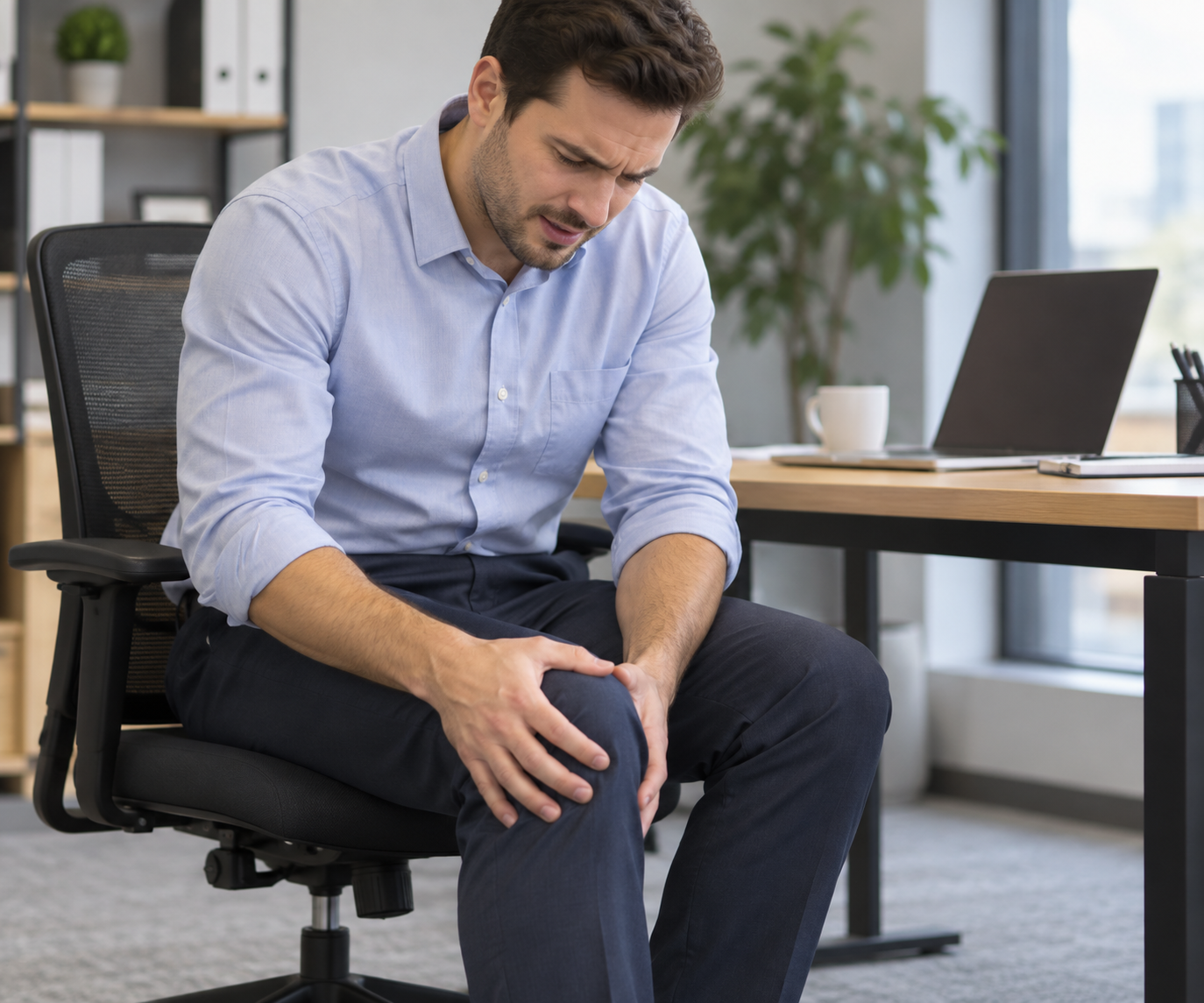
A long drive or workday at a desk keeps the knees bent for hours, which is when many people first notice an ache. The most common source is the joint behind the kneecap, which takes steady pressure when the knee stays bent for a long time. Arthritis can be another frequent reason, because arthritic knees tend to stiffen after rest and loosen once you move.
Knee pain after sitting is common and usually manageable. Where the ache sits, how quickly it fades, and what else the knee does during the day are useful clues. This article walks through those clues and explains when the knee deserves a closer look.
What You’ll Learn
The ache you feel after sitting usually comes from pressure behind the kneecap or from stiffness in a joint with arthritis, and each tends to leave a different pattern.
- Why a bent knee can start to ache, and how kneecap pain (often called runner’s knee) and arthritis stiffness feel different
- Other knee problems that can show up after sitting
- What can make long periods of sitting more comfortable
- Which signs call for an evaluation, and which need prompt care
Why Knee Pain Happens After Sitting
Knee pain after sitting usually happens because a bent knee presses the kneecap firmly against the thighbone for a long stretch of time. The kneecap glides in a groove at the end of the thighbone. When the knee is bent, that contact gets firmer, and a joint that is already irritated can start to ache.
The deeper the bend and the longer it lasts, the more noticeable the ache tends to be. A cramped airplane seat, low car seat, or movie theater chair can make the discomfort worse. Having room to stretch your legs may help.
Standing up adds its own moment of discomfort. The muscles and tissues around the knee have been still, so the first few steps can feel stiff or achy before the joint warms up.
Front-of-Knee Pain After Sitting
An ache at the front of the knee after sitting often comes from irritation around or behind the kneecap. Doctors call this patellofemoral pain, also known as “runner’s knee.” Some people call it “moviegoer’s knee” because it shows up so often after sitting. The American Academy of Orthopaedic Surgeons (AAOS) identifies prolonged sitting with bent knees as a common trigger. This includes sitting in theaters, cars, and airplanes.
This kind of knee pain can also show up on stairs, during squats, or while running and jumping. The ache is usually dull rather than sharp, and it tends to build slowly instead of starting with one injury.
Runner’s knee gets its name because the condition commonly affects runners. Each stride places pressure on the joint behind the kneecap. Running more miles, tackling hills, or frequently running downhill can increase that stress. However, you don’t have to run to experience this pain. Keeping your knees bent during a movie, a long drive, or a workday can irritate the same area.
Despite the name, kneecap pain can affect anyone, whether they run, play sports, or spend most of the day at a desk. The muscles in the thigh and hip help guide the kneecap as the knee bends and straightens. When those muscles are weak or tight, the kneecap may not glide as smoothly, which is why care for kneecap pain often includes strengthening exercises.
Some people also hear a crackling or popping sound when they stand up after sitting. The sound can have several causes, so it is worth paying attention to, especially when it comes with pain, swelling, or a change in how the knee moves.
Could Arthritis Be Causing My Knee Stiffness After Sitting?
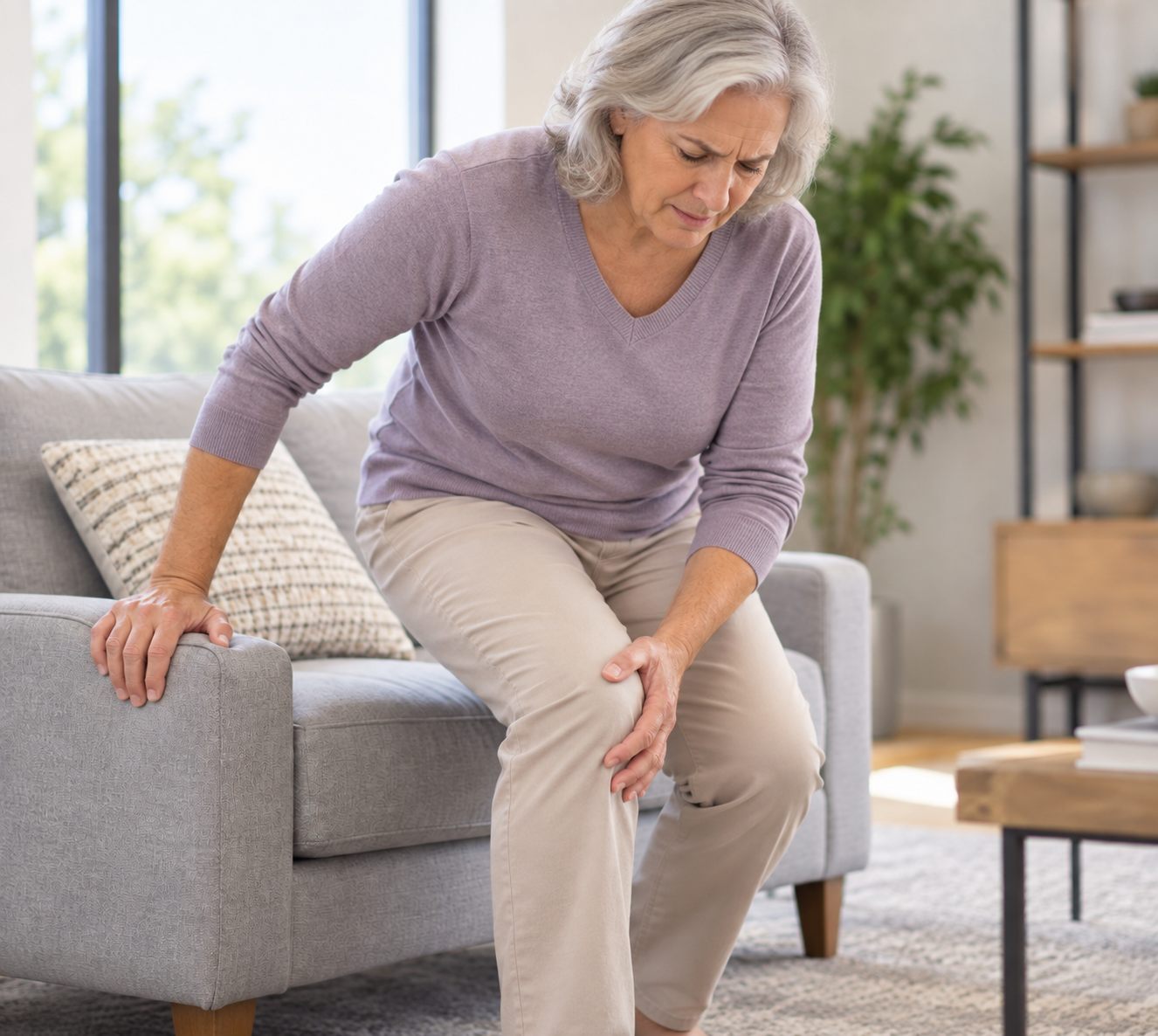
Sometimes. Stiffness after the knee has been still for a while can be a sign of knee arthritis. AAOS notes that knee arthritis pain and swelling may be worse in the morning or after sitting or resting. Stiffness after sitting has other causes too, so it does not mean you have arthritis on its own.
You may notice tightness or aching when taking your first steps after a long car ride or meeting. The stiffness may ease as you move. Over time, some people also notice swelling, grinding, or trouble fully bending or straightening the knee.
Arthritis can affect people at any age, including after an earlier knee injury. A diagnosis of arthritis does not by itself predict how the knee will change, and care often includes exercise, physical therapy, and other options suited to the individual knee.
Other Causes of Knee Pain After Sitting
Sitting can also bring out knee problems that are not related to the kneecap or arthritis. These tend to have extra clues beyond a general ache.
A torn meniscus affects the cartilage that cushions the knee joint. Symptoms can include catching, locking, or a feeling that the knee may give way, especially when turning or standing after a deep bend.
Knee tendinitis often causes pain just below the kneecap, particularly after activity or rest. Meanwhile, knee bursitis can cause localized tenderness and swelling that becomes noticeable when standing.
Knee pain can also come from somewhere else. Problems in the hip or lower back can send discomfort toward the knee, which is why an orthopedic exam looks beyond the knee itself.
What Your Knee Pain Symptoms May Mean
Where and when your knee hurts often tells you more than how much it hurts. None of these clues can confirm a diagnosis, but they can help you describe what you are feeling and decide whether it is time for an evaluation.
Clues in How Knee Pain After Sitting Behaves
Stiffness that fades within a few minutes of moving is usually less concerning than pain that lingers well after you get up. An ache that keeps showing up on stairs, during exercise, or at night suggests the knee itself needs attention, rather than just the chair you were sitting in.
| What you Notice | Possible Cause |
| Dull ache around the kneecap, also on stairs or squats | Runner’s knee (kneecap pain) |
| Stiffness that eases with walking, often worse in the morning | Knee arthritis |
| Catching, locking, or giving way | Meniscus problem |
| Pain below the kneecap after activity or rest | Tendon irritation |
| Tender, puffy spot on the front or inner knee | Bursitis |
| Swollen, tender calf after long travel | Blood clot (needs prompt care) |
Sitting Habits That Can Help Reduce Knee Discomfort
Changing how long the knee stays deeply bent often makes the biggest difference. Small, regular changes tend to help more than one perfect sitting position.
Standing up and walking for a minute or two every so often can ease the pressure behind the kneecap and help a stiff knee loosen. On road trips and flights, planned breaks and short aisle walks serve the same purpose. While seated, stretch your legs occasionally instead of keeping your feet tucked under the chair. This gives your knees a break from staying deeply bent.
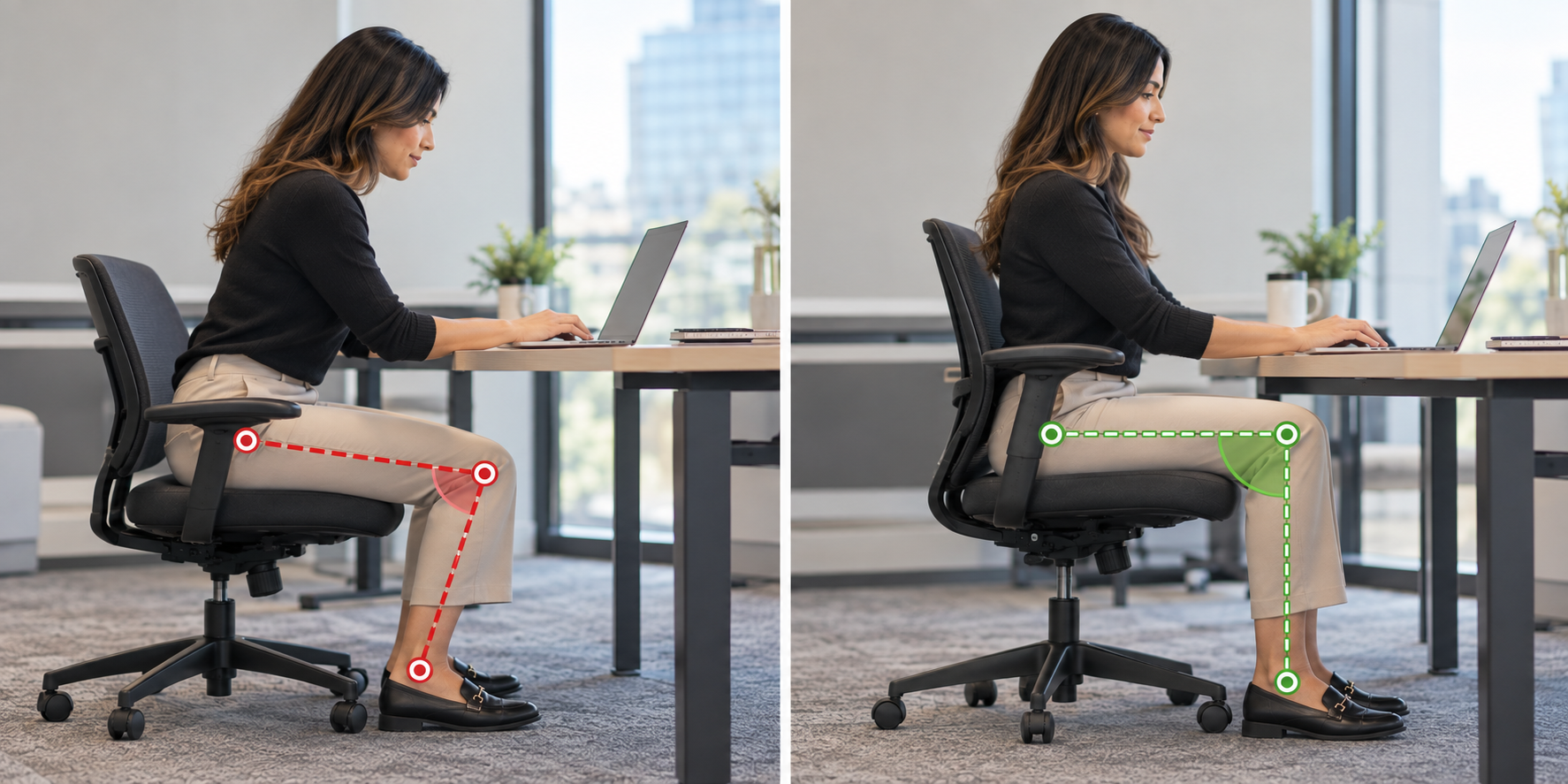
Seat height matters too. A chair that is too low bends the knees more sharply, while a height that keeps the knees roughly level with the hips is often more comfortable for a long workday.
Beyond sitting habits, care often focuses on the muscles that support the knee. Research supports exercise that strengthens both the hip and the knee as a first step in care for kneecap pain, and the AAOS recommends exercise for knee arthritis. A physical therapist can tailor that plan to the cause of your pain and your daily routine.
When Should Knee Pain After Sitting Be Checked?
Knee pain after sitting is worth an orthopedic evaluation when it keeps coming back for several weeks, gets worse over time, or starts to change what you do. Examples include avoiding stairs, changing how you drive, skipping workouts, or waking up at night with knee pain.
Swelling, catching, locking, or a knee that feels unstable are also reasons to have it checked, even if the pain itself is mild.
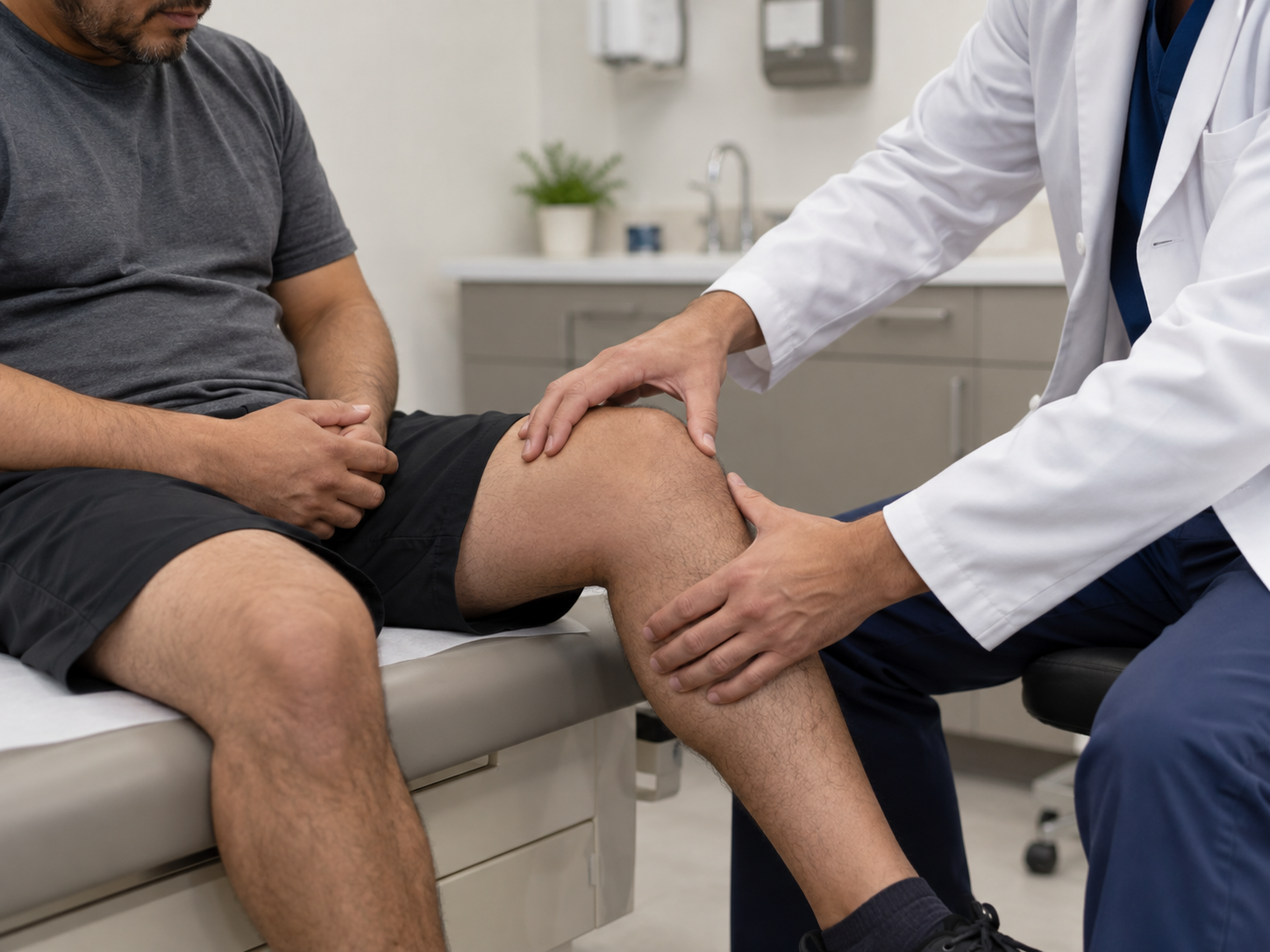
During an orthopedic visit, a doctor may ask where your knee hurts and what triggers the pain. The examination may include checking knee movement, strength, and stability. X-rays or other imaging may be used when more information is needed. Care often starts with physical therapy and activity changes, and it may include medication, injections, or bracing depending on the cause.
Signs That Need Prompt Medical Care
Some symptoms should not wait for a routine appointment:
- Swelling, warmth, or tenderness in the calf or leg, especially after a long flight or drive can be a sign of a blood clot
- Sudden shortness of breath or chest pain, which needs emergency care (call 911)
- A hot, red, swollen knee, especially with fever
- Being unable to put weight on the leg, or a knee that suddenly looks misshapen after an injury
The CDC states that sitting for a long time, especially with crossed legs, is a risk factor for blood clots. Most knee aches after sitting are not clots, but calf swelling and tenderness are a different pattern and deserve same-day attention.
Frequently Asked Questions About Knee Pain After Sitting
Why does my knee hurt when I stand up after sitting?
Standing up asks a knee that has been bent and still to straighten and take your weight all at once. If the joint behind the kneecap is irritated or the knee has arthritis, that first movement can hurt until the joint warms up.
Is it normal for my knees to feel stiff after sitting?
Brief stiffness that fades within a few minutes of walking is common, especially after a long drive or flight. Stiffness that lasts longer, keeps returning, or comes with swelling is worth having evaluated.
Does knee pain after sitting mean I have arthritis?
Not necessarily. Pain behind the kneecap is another common reason, and arthritis can happen at any age. An exam, and sometimes X-rays, can help tell the difference.
Can I have runner’s knee if I don’t run?
Yes. Runner’s knee is a nickname for pain around or behind the kneecap, and it is not limited to runners. Long periods of sitting, climbing stairs, squatting, and sports with a lot of jumping can all bring on that ache.
Is it better to sit with my legs straight or bent?
Neither position is ideal for hours at a time. Changing position regularly, stretching the legs out now and then, and standing up for short breaks are usually more comfortable than holding one posture.
Can sitting cross-legged or with my feet tucked under me hurt my knees?
It can. Sitting cross-legged, kneeling, or tucking the feet under the body bends the knee deeply, which can increase pressure behind the kneecap. Changing positions regularly may reduce knee discomfort. During long periods of travel, moving your legs and taking walking breaks can also support circulation.

Key Takeaways
- Knee pain after sitting most often comes from pressure behind the kneecap or from arthritis stiffness.
- Front-of-knee pain that also flares on stairs or squats often points to kneecap pain, also called runner’s knee.
- Stiffness that eases after a few minutes of walking is typical of arthritis, while catching or locking suggests a different problem.
- Regular position changes and hip and thigh strength often matter more than any single chair or posture.
- A swollen, tender calf after long travel needs prompt care, not a wait-and-see approach.
When Sitting Keeps Bothering Your Knee
A knee that aches every time you sit can quietly change your routine, from choosing aisle seats to dreading long drives. Knowing what the ache is tied to gives you and an orthopedic provider a clearer place to start.
At AOSMI, orthopedic providers, including Dr. Eric Buxbaum, evaluate knee pain by looking at where it hurts, how the knee moves, and what your days involve. The goal is a clear explanation and care options that fit your life, whether that starts with physical therapy or another approach.
If knee pain after sitting is affecting your work, travel, or everyday activities, call AOSMI at 732-720-2555, request an appointment, or contact us online.
*This article is for educational purposes only and does not replace professional medical advice, diagnosis, or treatment.