

Quick Answer
If your shoulder, elbow, or knee hurts after a day of yard work, you’re not alone. Yard work often involves repetitive lifting, reaching, gripping, and kneeling, which can leave muscles, tendons, and joints feeling sore. Most soreness improves with time, but pain that continues, gets worse, or makes everyday activities difficult is worth getting checked.
At a Glance
Common symptoms
- Shoulder pain after lifting or overhead trimming
- Elbow pain after raking or gripping tools
- Knee pain after gardening or kneeling
- Joint stiffness after repetitive yard work
Common activities that may contribute
- Raking leaves
- Pruning shrubs
- Lifting mulch or soil
- Pulling weeds
- Pushing a lawn mower
When an evaluation may help
- Pain lasts longer than expected
- Swelling develops
- Weakness makes lifting or gripping difficult
- Joint movement becomes limited
Why Yard Work Can Lead to Shoulder, Elbow, and Joint Pain
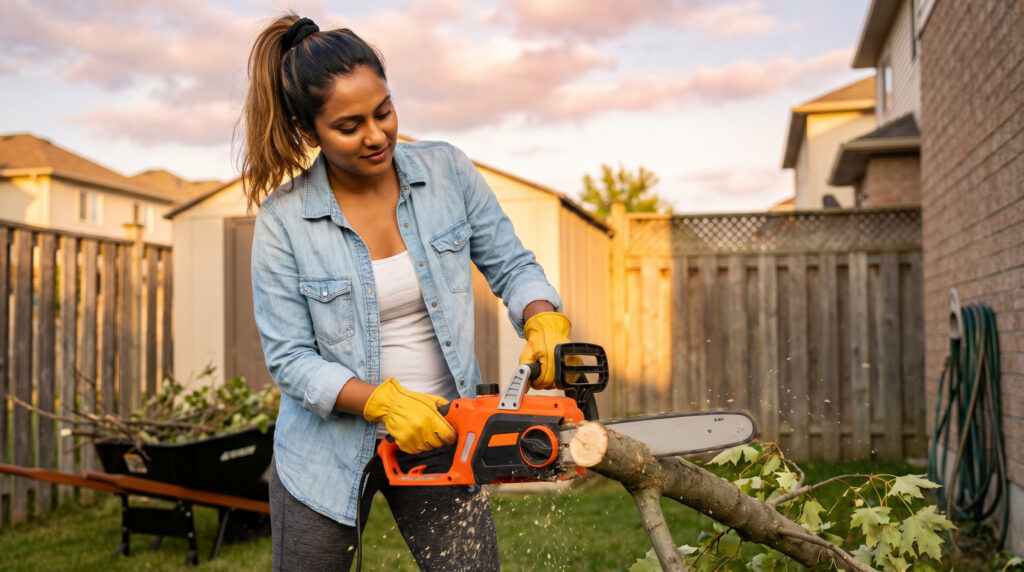
Yard work is a full-body workout, even if it doesn’t feel like one while you’re doing it. Spending hours raking leaves, pulling weeds, carrying heavy bags of mulch, or trimming branches asks a lot of your shoulders, elbows, knees, and back. It’s common to feel sore afterward, especially if you aren’t used to those movements.
The longer you work, the more those movements add up. Spending hours doing the same task, lifting heavy bags, gripping tools tightly, or reaching overhead can leave your muscles and joints feeling overworked. Mild soreness is common, but pain that becomes sharp, causes swelling or weakness, or makes everyday activities difficult is worth getting checked.
| Yard Work Activity | Areas Often Affected | Why |
| Raking | Elbow | Repetitive gripping and pulling |
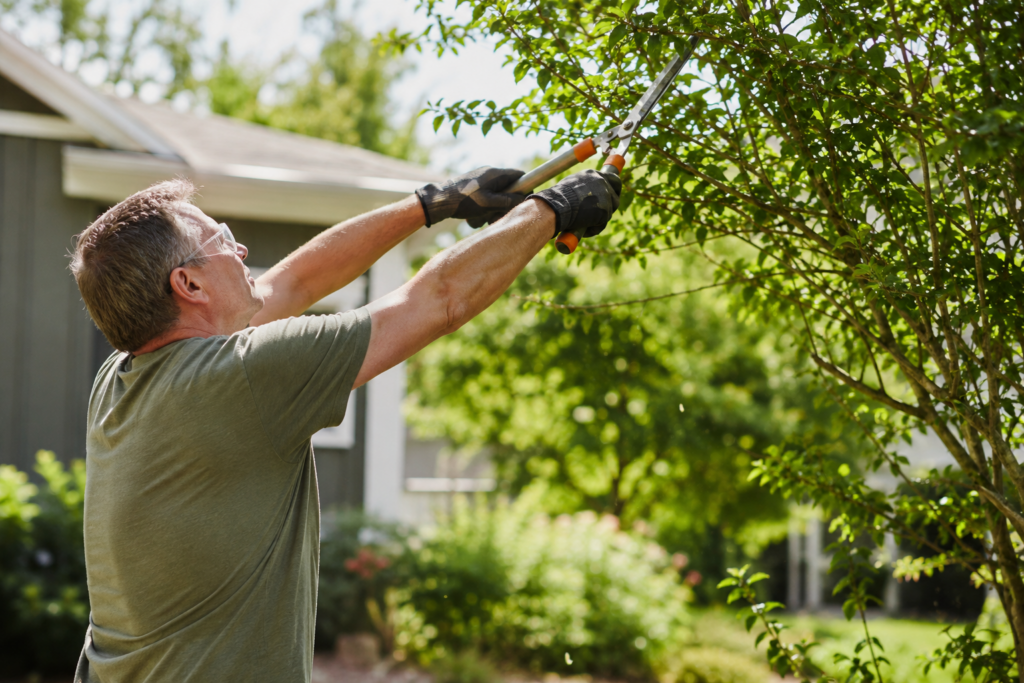
| Hedge Trimming | Shoulder | Frequent overhead reaching |
| Gardening | Knee | Prolonged kneeling |
| Carrying Mulch | Shoulder and back | Heavy lifting |
| Pulling Weeds | Elbow and shoulder | Repetitive force |
Two people can spend the same afternoon working in the yard and have very different experiences. Your overall health, previous injuries, fitness level, and how long you worked all play a role in how your body responds.
Why does my shoulder hurt after yard work?
If your shoulder hurts after trimming branches or lifting bags of mulch, the rotator cuff or other shoulder tendons may have become irritated. The rotator cuff is a group of muscles and tendons that helps keep your shoulder stable while you lift, reach, and carry things. After a long day of overhead work, even everyday movements like reaching into a cabinet or lifting groceries can become uncomfortable.
Common shoulder symptoms
- Pain lifting the arm
- Pain reaching overhead
- Difficulty reaching behind the back
- Pain when sleeping on one shoulder
- Weakness carrying heavy objects
A sudden pull, awkward lift, or fall can also result in a more significant shoulder injury, especially when pain is accompanied by weakness, bruising, a popping sensation, or a noticeable loss of motion.
If shoulder pain is making it hard to lift your arm, reach overhead, or sleep comfortably, it’s a good idea to see an orthopedic specialist if it isn’t improving.
Why did the pain start later?
Have you ever finished working in the yard feeling fine, only to wake up sore the next morning? Muscles, tendons, and joints can become irritated during repetitive activity, and discomfort often becomes more noticeable after you’ve had time to rest.
Can raking leaves cause elbow pain?
Yes. If you’ve spent the afternoon raking leaves or squeezing pruning shears, it’s normal to wonder why your elbow suddenly hurts. Those repeated gripping and twisting motions can irritate the tendons around the elbow, making everyday tasks like opening a jar or shaking hands uncomfortable.
Pain can develop on either the inside or outside of the elbow, depending on which tendons are irritated. Although these problems are often called tennis elbow or golfer’s elbow, they also happen after activities like raking leaves, trimming shrubs, pulling weeds, or carrying heavy buckets.
It is worth getting elbow pain checked if it lasts, keeps returning, reduces grip strength, causes swelling, or begins interfering with everyday activities.
Why does my knee hurt after gardening?
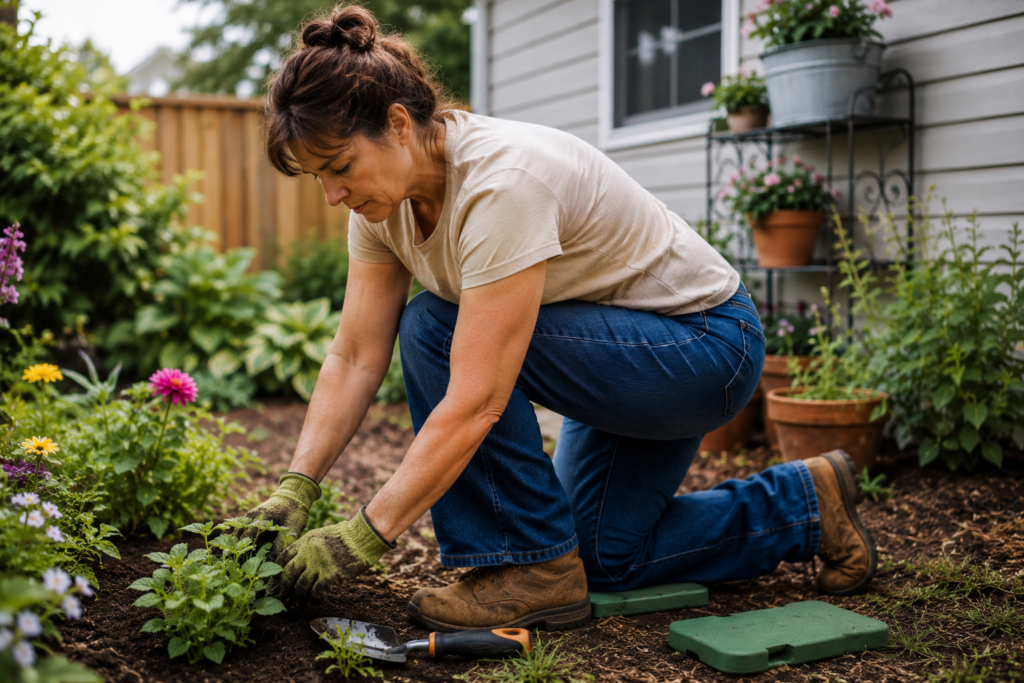
Gardening is tough on your knees. Spending long periods kneeling, squatting, standing back up, and moving around flower beds can irritate the tissues that cushion and support the knee.
Repeated squatting, standing, and lifting can also irritate tendons or make existing arthritis or joint pain more noticeable. Knee pain that changes how you walk, limits movement, or continues after yard work should be evaluated.
How to Tell Normal Soreness From an Injury Worth Checking
Mild post-activity soreness often feels broad, achy, and temporary. Symptoms that deserve more attention may feel sharp, catching, unstable, or swollen. A sudden pop, fall, direct blow, inability to bear weight, major swelling, visible deformity, fever, or a red hot joint should be addressed promptly.
Normal soreness vs. symptoms that deserve evaluation
| Symptom | Often associated with |
| Mild muscle soreness | Temporary post-activity fatigue |
| Sharp pain with movement | Tendon or joint irritation |
| Swelling | Soft tissue or joint inflammation |
| Weakness | A condition that deserves further evaluation |
| Loss of motion | An orthopedic assessment helps determine what is contributing to the loss of motion |
Did you know?
Shoulder, elbow, knee pain after yard work is often related to repetitive stress rather than one specific injury. Symptoms sometimes become more noticeable several hours after activity as irritated tissues respond to repeated stress.
What Happens at an Orthopedic Appointment?
An orthopedic visit usually starts with a conversation about when the pain began, what you were doing, and how it affects your daily activities. The specialist then checks how the joint moves, how strong it feels, and whether certain movements reproduce your pain. If more information is needed, imaging such as an X-ray or MRI may be recommended.
Can physical therapy help after a yard work injury?
Physical therapy is about more than exercises. A physical therapist looks at how you move, where your pain starts, and whether everyday movements are placing extra stress on the painful area. The goal is to help you move more comfortably during yard work and other everyday activities.
Physical therapy should be guided by an evaluation, especially when symptoms are persistent, recurrent, worsening, or associated with swelling, weakness, or loss of motion. Some patients benefit from rehabilitation alone, while others require further orthopedic assessment before a therapy plan is recommended.

When to Request Care for Yard Work Injuries in Toms River
If your pain isn’t getting better, keeps coming back, or starts interfering with everyday activities, it’s likely more than ordinary post-yard-work soreness.
Some symptoms shouldn’t wait. Seek medical attention after a fall or if you have severe pain, major swelling, a visible deformity, can’t use your arm or bear weight, or develop a fever or a red, hot joint.
Key Takeaways
- Yard work injuries commonly affect the shoulder, elbow, knee, and irritated joints after repetitive reaching, gripping, kneeling, lifting, or trimming.
- Shoulder pain after overhead work often affects the rotator cuff, surrounding tendons, or the shoulder joint.
- Elbow pain after raking or gripping tools may reflect forearm tendon overuse rather than a sports-only problem.
- Knee pain after gardening often develops from repeated kneeling, tendon irritation, or flare-ups of existing joint conditions.
- Persistent, worsening, swollen, weak, or activity-limiting pain should be evaluated by a qualified clinician.
Frequently Asked Questions
What are common yard work injuries in Toms River?
Common yard work injuries include shoulder tendon irritation, rotator cuff-related pain, elbow tendon overuse, knee irritation from kneeling, muscle strains, ligament sprains, and flare-ups of existing joint conditions. These symptoms often develop after repetitive lifting, raking, pruning, gardening, or working overhead for extended periods.
Why does my shoulder hurt after yard work?
Shoulder pain after yard work often happens after repeated lifting, reaching, carrying, or overhead work. Those movements can irritate the muscles and tendons that help move and support the shoulder.
Can raking or trimming cause elbow pain?
Yes. Raking, trimming, pruning, and gripping tools can stress the forearm tendons near the elbow. Pain often develops on the outside or inside of the elbow and frequently becomes worse during gripping, lifting, twisting, or using hand tools.
Why does my knee hurt after gardening?
Gardening places repeated stress on the knees through kneeling, squatting, twisting, and standing on uneven ground. These movements can irritate tendons, cushioning tissues, or existing joint conditions, especially during longer gardening sessions or repetitive yard work.
When should I see an orthopedic specialist after yard work?
Consider seeing an orthopedic specialist if pain persists, worsens, causes swelling or weakness, limits movement, or begins interfering with everyday activities. Seek prompt care for severe pain after a fall, inability to bear weight, visible deformity, fever, or a red hot joint.
Can physical therapy help with yard-work-related shoulder, elbow, or knee pain?
Physical therapy often supports recovery from yard-work-related shoulder, elbow, or knee pain by improving strength, mobility, the way you move, and getting back to everyday activities more comfortably. An evaluation helps determine whether physical therapy, orthopedic care, or additional testing is the most appropriate next step.
Still Having Shoulder, Elbow, or Knee Pain After Yard Work?
If your pain isn’t improving or is making everyday activities harder, an orthopedic evaluation can help determine what’s contributing to your pain and discuss the next steps that make sense for you.
To request an appointment, call the Toms River Physicians Department at 732-341-6226 or our Rehabilitation Department at 732-720-2566.
*This blog is for educational purposes only and should not replace professional medical advice, diagnosis, or treatment. Each person’s symptoms and care needs are different.