

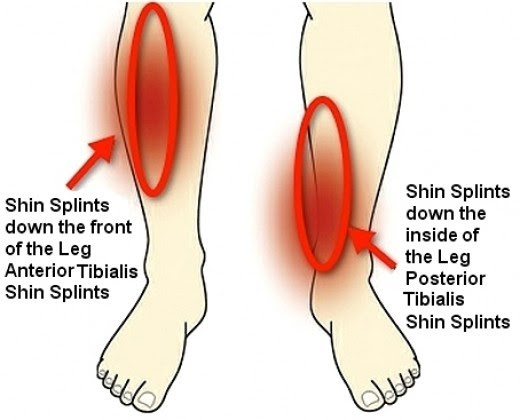
What are Shin Splints?
Shin splints are a common condition affecting runners. While most commonly referring to medial tibial stress syndrome, a painful inflammation of the inner border of the tibia (shin bone) from repetitive calf muscle pull, the condition can also be from tendonitis, or a stress fracture of the tibia. A stress fracture results when repetitive stress or impact causes bone injury which does not have the chance to heal due to continued stresses, and cumulatively results in a break in the bone.
What Causes Shin Splints?
The most common causes of shin splints include a change in the running surface, muscle imbalance, worn or improper running shoes such as wearing court sport sneakers for running, or increases in workout distance, frequency or intensity. Even small training changes, like switching from a treadmill to pavement, can increase stress on the lower limbs.
- Sudden increases in running distance, speed, or training frequency
- Running on hard or uneven surfaces
- Muscle tightness or imbalance between the calf and shin muscles
- Wearing improper or worn-out footwear
How To Prevent Shin Splints?
Prevention occurs by starting with the appropriate running shoe for your foot type. Evaluation of foot and ankle alignment will assist with finding the proper running shoes for pronators, those with low arches whose feet roll in while running, and supinators, those with high arches whose feet roll out with running. Most running shoe manufacturers have shoes for the different foot types. The knowledgeable staff at the Runner’s High can evaluate your foot and ankle and recommend the appropriate running shoe type.
Slowly increasing the distance, frequency, and velocity of running can allow the body to accommodate to the stresses of running. Running on soft or cushioned surfaces can also reduce stress on the lower strength is important.limb and prevent shin splints. Stretching to maintain flexibility and working to balance your muscle
How to Treat Shin Splints?
The treatment for shin splints includes relative rest with a period of no running. Conditioning can be maintained by non-impact exercises such as cycling or swimming. Stretching and strengthening to balance muscle strength on the front of the leg with the calf muscles is important. If a stress fracture occurs, rest and avoidance of impact and repetitive stresses is necessary to allow healing. In rare cases surgery is needed to obtain healing. AOSMI’s board-certified physicians use diagnostic imaging and personalized treatment plans to help patients return safely to activity.
Frequently Asked Questions about Shin Splints

What do shin splints feel like?
Shin splints typically feel like a dull, aching pain along the inner edge of the shin bone. The discomfort often starts during or after exercise and may improve with rest early on. As the condition worsens, the pain can become sharper and occur earlier in activity or even during normal walking.
How to tape a shin for shin splints?
Taping for shin splints is usually done to support the muscles and reduce strain on the shin bone. Common methods include kinesiology tape or athletic tape applied along the shin and calf to help manage stress during movement. Taping may provide short-term support, but it does not treat the underlying cause and works best when combined with rest, stretching, and proper footwear.
How long do shin splints take to heal?
Healing time for shin splints varies depending on severity and activity level.
- Mild cases may improve within 2–4 weeks with rest and activity modification.
- Moderate to severe cases can take 6–8 weeks or longer, especially if training continues too soon.
- If pain persists or worsens, evaluation is important to rule out a stress fracture.
Do compression socks help shin splints?
Compression socks may help some people by improving circulation and reducing muscle vibration during activity. While they can provide comfort and support, compression socks alone do not address the root causes of shin splints, such as training errors, muscle imbalance, or improper footwear.
Does heat/icing help shin splints?
Most people benefit from icing in the early stages of shin splints.
Ice is commonly used to help reduce pain and inflammation, especially after activity.
Heat may be helpful before exercise to loosen tight muscles but is generally avoided during active inflammation.
Can shin splints cause bruising?
Shin splints do not usually cause bruising. Visible bruising may indicate a different injury, such as a muscle strain, direct trauma, or a more serious condition. If bruising or significant swelling is present, further evaluation is recommended.
Care Across New Jersey
Advanced Orthopedics and Sports Medicine Institute (AOSMI) provides comprehensive care for runners and athletes dealing with shin splints, overuse injuries, and leg pain. We offer injury care locations across multiple convenient locations in New Jersey, including:
Request an Appointment
AOSMI’s integrated approach combines orthopedic care, physical therapy, and sports performance programs to help patients on their care journey. Schedule a consultation with a physician near you.