


Yes. A backpack that is too heavy or worn the wrong way can cause back, neck, and shoulder pain in kids and teens. That’s why fit matters as much as color and style when you shop for back-to-school.
The good news is that weight, size, and strap fit are all things you can check at home. Getting them right can make a backpack more comfortable to carry all day.
What You’ll Learn
- How much your child’s backpack should weigh
- Which backpack types and features work best
- How to check the fit before buying
- What to do when books and school supplies make the bag too heavy
How Can a Heavy Backpack Cause Back Pain?
A heavy backpack pulls your child’s body backward. To balance the load, they lean forward, round their shoulders, or shift to one side. Holding that position for long periods can strain the muscles in the back, neck, and shoulders.
Fit matters too. A bag that hangs too low, has loose straps, or sits on one shoulder pulls the weight away from the body or onto one side.
It helps to know that the American Academy of Pediatrics says backpacks have not been linked to scoliosis or other long-term spine problems. Still, pain that keeps coming back, gets worse, or gets in the way of daily life is worth checking with a doctor.
How Heavy Should My Child’s Backpack Be?
The American Academy of Pediatrics and the American Academy of Orthopaedic Surgeons recommend that a loaded backpack weigh no more than 15% of a child’s body weight. For a 100-pound child, that is 15 pounds.
Published guidelines range from 5% to 20% of body weight. The chart below shows both 10% and 15% of your child’s weight.
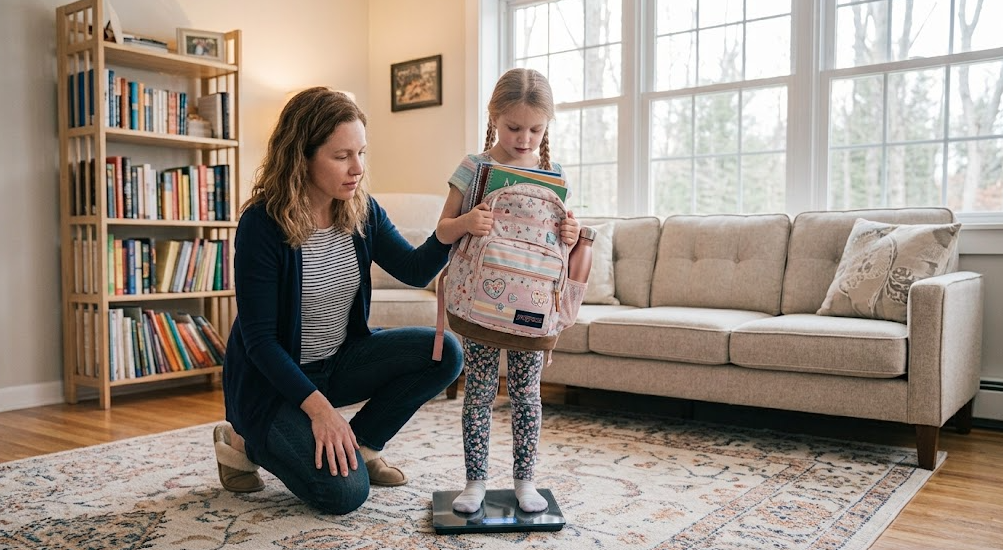
Weigh the backpack with everything your child carries on a typical day. That includes a tablet or laptop, notebooks, textbooks, folders, a charger, a water bottle, and lunch.
Backpack Weight Reference by Child’s Weight
| Child’s Weight | 10% of Child’s Weight | 15% of Child’s Weight (AAP/AAOS Guideline) |
| 40 lb | 4 lb | 6 lb |
| 50 lb | 5 lb | 7.5 lb |
| 60 lb | 6 lb | 9 lb |
| 70 lb | 7 lb | 10.5 lb |
| 80 lb | 8 lb | 12 lb |
| 100 lb | 10 lb | 15 lb |
| 120 lb | 12 lb | 18 lb |
| 140 lb | 14 lb | 21 lb |
How to Weigh a Backpack at Home
- Weigh your child on a household scale.
- Pack the backpack with the items needed for a normal school day.
- Weigh the loaded backpack by itself.
- Compare that number with the 10% and 15% figures in the chart.
Check the weight again when classes, activities, or school projects change. A bag that was fine in September can get heavier as books and papers pile up.
How to Choose a Backpack for Better Support
Look for a light bag that fits your child’s size, with two wide straps, a padded back, and several pockets. If you can, have your child try it on with both straps adjusted before you buy.
Backpack Features to Look For
| Feature | What to Check |
| Lightweight empty bag | A light bag leaves more room for books before the load gets too heavy. |
| Two wide adjustable straps | Both straps should fit comfortably and stay even in length. |
| Padded back | Padding can improve comfort and protect the back from hard book corners. |
| Right size | The bag should match your child’s size. Kids tend to fill bigger bags. |
| Multiple compartments | The heaviest items should stay in the section closest to the back. |
| Chest or waist strap | Helps keep the load stable, but does not offset a bag that is too heavy. |
Types of School Backpacks Compared
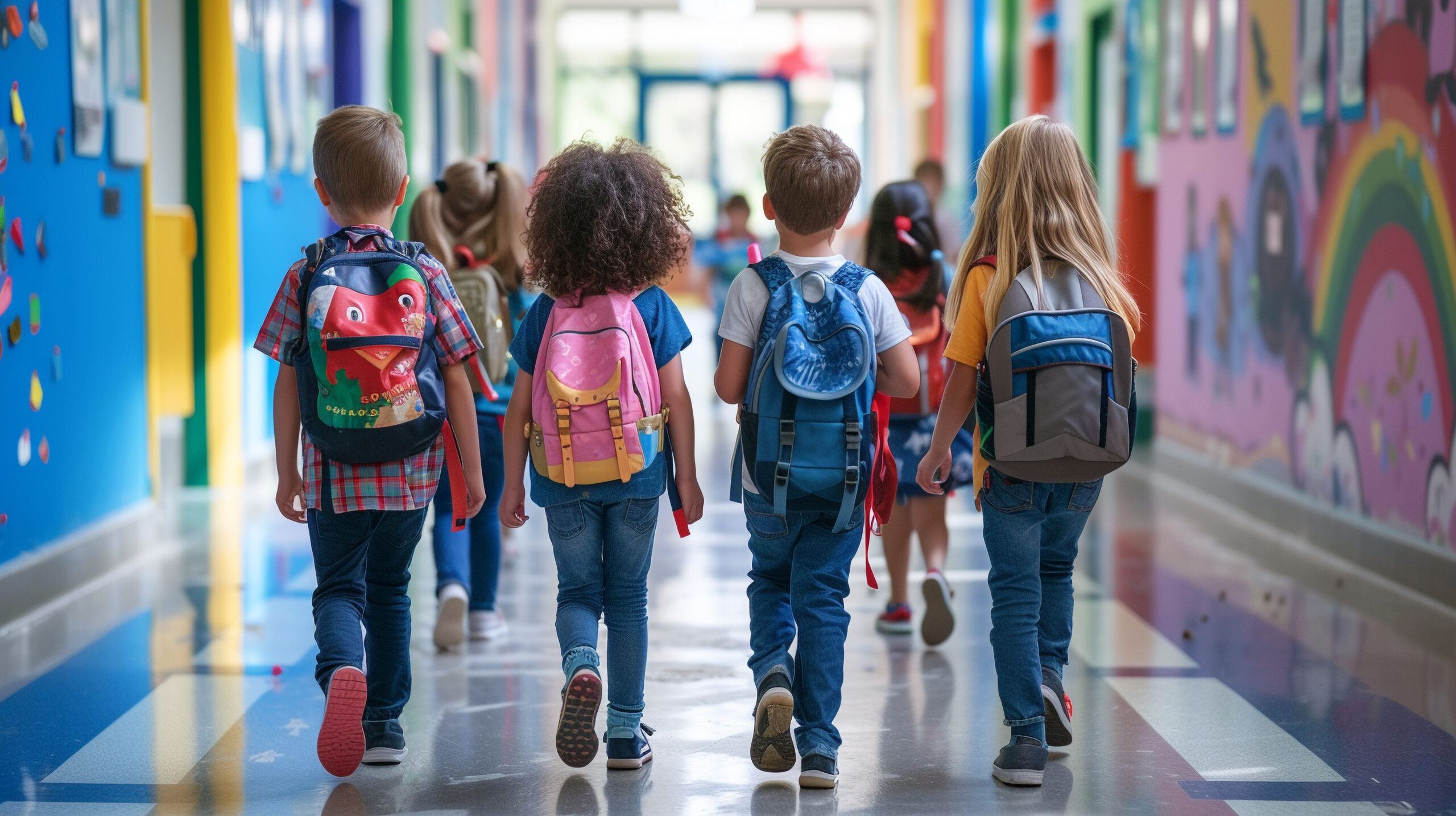
For most students, a standard backpack with two padded straps works well. Here is how the most common styles compare.
Standard two-strap backpack: Two wide, padded straps spread the weight across both shoulders. It handles a typical daily load of books and a device.
Backpack with a chest strap or waist belt: These straps keep the bag close to the body and spread the weight more evenly. They help most on long walks or with heavy loads.
Rolling backpack: Takes weight off the back, but it doesn’t suit every school.
Messenger bag or single-strap sling: Carrying weight on one shoulder can strain muscles, so save these for light loads.
Drawstring bag: Thin cords have no padding and can dig into the shoulders. Use these for gym clothes, not a full school load.
Whatever the style, skip the extra-large size meant to grow into. The more room a backpack has, the more a child tends to carry.
Are Rolling Backpacks Better for Back Support?
A rolling backpack can take weight off the back, but it is not right for every school. Stairs, crowded hallways, buses, and small lockers can make one hard to manage, and your child may still need to lift it several times a day.
Before you buy one, check that the school allows it and think about your child’s route between classes.
How Should a School Backpack Fit?
A good backpack sits between the waist and 1 to 2 inches below the shoulders. It should rest in the curve of the lower back and never hang more than 4 inches below the waist.
Quick Backpack Fit Check
- Use both shoulder straps and adjust them to the same length.
- Keep the bag close to the body without making the straps uncomfortably tight.
- Check that your child can stand upright and walk normally.
- Make sure the straps do not leave deep marks or cause tingling.
Teach your child to bend at the knees when lifting a heavy backpack off the floor.
What If My Child Has Too Many Textbooks?
Start by packing only what each day needs. Go over the class schedule together and decide what has to travel. Put the heaviest books or devices in the pocket closest to the back, and use smaller pockets to keep loose items from shifting.
If there isn’t time to stop at a locker, ask the school about options. Some schools offer a second set of books for home, extra time for locker stops, or digital copies. A weekly cleanout also keeps old papers and forgotten items from adding weight.
Small changes add up, too. Choose a light device case, send a smaller water bottle, and leave sports gear at school when you can.

Signs Your Child’s Backpack Is Too Heavy
Kids don’t always say when a bag hurts. Watch how your child lifts the bag, stands, and walks, and look for these signs:
- The backpack is difficult to put on or take off.
- Your child leans forward, shifts to one side, or changes the way they walk.
- The straps leave deep marks on the shoulders.
- Your child reports back, neck, or shoulder discomfort after carrying it.
If you notice these signs, remove unneeded items, adjust both straps, and check the weight again.
Frequently Asked Questions
Can a Heavy Backpack Cause Scoliosis?
There’s no evidence that they do. Backpacks have not been shown to cause scoliosis or other long-term spine problems. A heavy or poorly fitted bag can cause sore muscles and discomfort in the back, neck, or shoulders.
What Is the Best Backpack for a Child With Back Pain?
If your child already has back pain, talk with their doctor before you buy. A new backpack can make carrying more comfortable, but it won’t treat pain that has already started. Use the features list above to compare options.
Is More Padding Always Better?
No. More padding does not mean less pain. Padding adds comfort, but it can’t fix a bag that is too big or too heavy.
How Often Should I Check My Child’s Backpack Weight?
Check it before school starts, after a schedule change, and whenever your child starts carrying different books. A weekly cleanout helps keep the bag from getting heavier over time.
Are Backpacks Bad for Your Back?
Backpacks aren’t harmful on their own. Problems are more likely when a bag is too heavy, fits poorly, hangs too low, or rests on one shoulder. Use both straps and keep the load under 15% of your child’s body weight.
What Is Backpack Syndrome?
Backpack syndrome is a nickname for back, neck, or shoulder pain linked to carrying a heavy or poorly fitted backpack. It is not a medical diagnosis.
When Should I Contact a Doctor About My Child’s Back Pain?
Talk with your child’s pediatrician or an orthopedic specialist if back pain keeps coming back, gets worse, or doesn’t improve after you lighten the load and fix the fit. Also call the doctor about numbness, tingling, or back pain that happens even without a backpack.
Looking for orthopedic care in New Jersey? AOSMI provides orthopedic and non-operative bone, joint, and muscle care across the state.
If your child has persistent or worsening back pain, call the AOSMI team at 732-720-2555 or request an appointment online.
*This article was prepared by AOSMI’s editorial team from published sources for general educational purposes only. It is not medical advice for a specific child. AOSMI has not evaluated your child and cannot recommend a backpack, weight limit, diagnosis, or treatment without an appropriate clinical assessment. Speak with a qualified healthcare professional if you have questions about your child’s symptoms.