

What Is Anterior Pelvic Tilt?
Anterior pelvic tilt describes a posture where the pelvis tips forward, which increases the curve in the lower spine and changes how the hips and core interact during movement. After noticing posture changes, back discomfort, or a feeling that their body alignment looks “off.”
What does anterior pelvic tilt look like?
People often notice a more pronounced lower-back arch, hips positioned forward, and the abdomen appearing more prominent. This visual change leads to frequent questions such as does anterior pelvic tilt cause belly pooch. In some cases, posture alone influences appearance, but this does not reflect body fat, weight gain, or a medical condition.
“Posture exists on a spectrum. Anterior pelvic tilt is common, and the focus should always be on how someone moves and feels, not just how they look,” says Peter Sanzio, PT, Director of Physical Therapy at AOSMI.
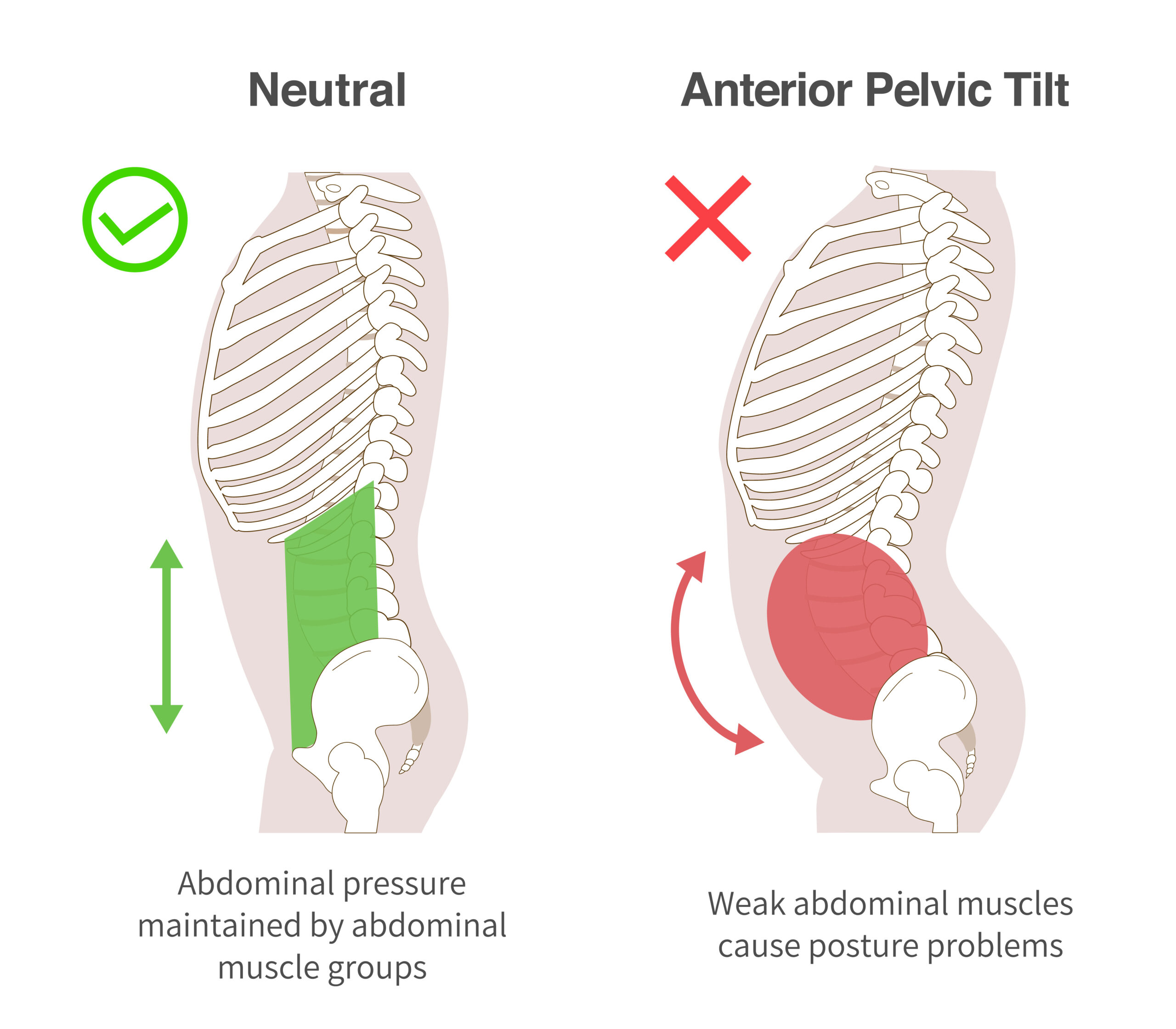
What Are the Symptoms of Anterior Pelvic Tilt?
Not everyone with anterior pelvic tilt experiences symptoms. When symptoms do occur, they often relate to movement patterns and daily demands rather than posture alone.
Some people report discomfort patterns that prompt questions like can anterior pelvic tilt cause lower back pain or stiffness after prolonged sitting or standing. Others wonder does anterior pelvic tilt make you shorter or how much height do you lose from anterior pelvic tilt. Posture may change how tall someone appears, but it does not typically reduce true height.
What Causes Anterior Pelvic Tilt?
Anterior pelvic tilt usually develops gradually through repeated habits and movement patterns.
Factors that often contribute include:
- Prolonged sitting with limited position changes
- Repetitive work or athletic demands
- Muscle imbalances that develop over time
- Reduced awareness of posture during daily activities
This is why people commonly ask can weak hip flexors cause anterior pelvic tilt or what muscles are weak with anterior pelvic tilt. A physical therapist looks at how the hips, core, and spine work together rather than isolating one muscle as the problem.
Is Anterior Pelvic Tilt Bad?
The answer depends on the individual. Many people live with this posture and never experience pain or limitations.
People often wonder “can anterior pelvic tilt cause digestive issues”. While posture may affect comfort, digestive symptoms require evaluation by appropriate medical professionals and should not be attributed to posture alone.
“We don’t treat posture in isolation. We treat how posture interacts with movement, work demands, and symptoms,” explains Peter Sanzio, PT.
How to Tell If You Have Anterior Pelvic Tilt
Using mirrors or online tests. Visual checks alone can be misleading. A licensed physical therapist evaluates posture alongside movement quality, strength, flexibility, and symptom history to provide meaningful insight.

Can You Actually Fix Anterior Pelvic Tilt?
Posture is not something that gets permanently “fixed.” It adapts based on habits, activity levels, and daily movement.
Physical therapy may help individuals understand:
- How to sit with anterior pelvic tilt during work or daily tasks
- How to approach sleep positions
- How movement habits can influence comfort over time
Can Exercise, Yoga, or Walking Help Anterior Pelvic Tilt?
People frequently ask:
- Are squats good for anterior pelvic tilt
- Can planks fix anterior pelvic tilt
- Can yoga fix anterior pelvic tilt
- Can walking fix anterior pelvic tilt
Movement can support posture awareness and overall health, but no single exercise corrects pelvic alignment for everyone. A physical therapist helps determine which movements support an individual’s goals without overstressing the body.
Risk Factors, Complications, and Prevention
If symptoms persist, people often worry about complications, but the focus of care remains on reducing strain and improving movement efficiency. Prevention tips often emphasize movement variety, posture awareness, and avoiding long periods in one position.
Stretches a Physical Therapist May Use for Anterior Pelvic Tilt and Posture
Physical therapists often use stretching as part of a larger treatment plan for anterior pelvic tilt and posture concerns. The examples below describe general stretches a therapist may use in a clinical setting. These are not recommendations or instructions for at-home exercise. A licensed physical therapist can determine what is appropriate based on individual needs.
Hip Flexor Stretch
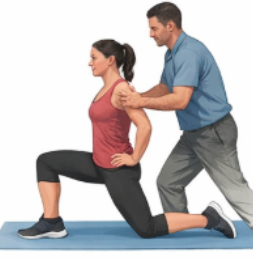
Description: The patient may be positioned in a standing or kneeling stance with one leg forward and the other extended behind them. The therapist may guide the hips into a controlled position to target the front of the hip.
Rationale: Tight hip flexors can pull the pelvis forward. This stretch may be used to reduce tension in the front of the hips and support improved pelvic positioning.
Quadriceps Stretch

Description: The patient may be positioned standing or lying down while the therapist helps bring the heel toward the buttock to stretch the front of the thigh.
Rationale: The quadriceps attach near the pelvis. Stretching this area may help reduce strain that affects pelvic alignment.
Lower Back Stretch

Description: The patient may lie on their back with knees bent while the therapist guides the knees toward the chest or into a supported position that reduces tension in the lower spine.
Rationale: This type of stretch may help reduce tightness in the lower back that can contribute to increased arching and postural strain.
Hamstring Stretch
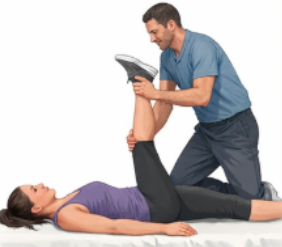
Description: The patient may lie on their back while the therapist lifts one leg at a time to stretch the back of the thigh.
Rationale: Hamstring tightness can affect how the pelvis moves. Stretching may support better coordination between the hips and lower back.
Frequently Asked Questions About Anterior Pelvic Tilt
How to tell if you have anterior pelvic tilt?
A physical therapist assesses posture and movement together rather than relying on appearance alone.
Does anterior pelvic tilt make you shorter?
It may change posture appearance but does not typically reduce actual height.
Can anterior pelvic tilt be corrected permanently?
Posture adapts over time. Care focuses on improving comfort and movement, not permanent correction.
Does anterior pelvic tilt cause a belly pooch?
Posture can influence appearance in some individuals, but this varies and is not a diagnosis.
Physical Therapy Care at AOSMI: Next Steps
AOSMI provides comprehensive physical therapy services focused on movement quality, posture awareness, and functional goals. Care plans are individualized and guided by licensed physical therapists who consider daily activities, work demands, and long-term mobility.
If posture concerns, back discomfort, or movement limitations are affecting your daily life, professional guidance may help clarify next steps.
Request an appointment with a Physical Therapist from our team to learn more about available services or call us at 732-720-2566.