


Chiropractic Care for Injury Pain After a Concussion
Expertly Reviewed by Dr. Kristopher R. Tardio, DC, Doctor of Chiropractic
A concussion affects the brain, but the force that caused it can also affect the neck. After the concussion has been evaluated, you may still notice neck pain, stiffness, headaches, or trouble turning your head.
The muscles, joints, and other tissues in the neck may have been strained during the same fall, collision, or sports injury. Chiropractic care may be one option for addressing the neck-related part of the injury.
Quick Points
- Chiropractic care treats the neck, not the concussion itself.
- The same injury that causes a concussion can also strain the muscles, joints, and other tissues of the neck.
- A neck evaluation may help determine whether ongoing pain, stiffness, headaches, or limited movement are related to the neck.
- Treatment is based on the findings of the evaluation and may include gentle chiropractic care, soft tissue therapy, and guided exercises.
- A concussion should always be medically evaluated before chiropractic treatment begins.
Why Does My Neck Still Hurt After a Concussion?
The brain and the neck can be injured at the same time, but they do not always recover at the same pace. Concussion symptoms may begin to improve while the neck remains sore, tight, or difficult to move.
During a fall or collision, the head can move quickly forward, backward, or sideways. The neck absorbs some of that force. This may strain the muscles, irritate the joints, or affect the tissues that help support and move the neck.
You may notice the problem while driving, looking down at a phone, working at a computer, exercising, or trying to sleep comfortably. Headaches that begin near the base of the skull or change with neck movement may sometimes be related to the neck.
Chiropractic care does not treat the concussion itself. Instead, it focuses on evaluating and addressing neck-related problems that may still be contributing to pain or limited movement.
What Can Be Affected in the Neck?
| Area involved | What it may feel like | Why it matters |
| Neck joints | Stiffness or trouble turning your head | Limited joint movement can make driving, working, and other daily activities uncomfortable. |
| Neck and shoulder muscles | Tightness, soreness, or spasm | Muscle tension can contribute to pain and make the neck harder to move. |
| Upper neck near the base of the skull | Tenderness or headaches that change with neck movement | Irritation in the upper neck may contribute to certain headaches. |
| Muscles that support the neck | Fatigue, soreness, or discomfort during movement | These muscles help control and support the neck during everyday activity. |
During the evaluation, Dr. Tardio looks at each of these areas to understand which parts of the neck may be contributing to your symptoms before recommending treatment.
What to Expect During Your Evaluation
The first visit begins with a conversation about the injury and what has changed since it happened. Dr. Tardio asks where the neck feels sore or tight, which movements are uncomfortable, and whether the problem affects sleep, work, driving, exercise, or other daily activities.
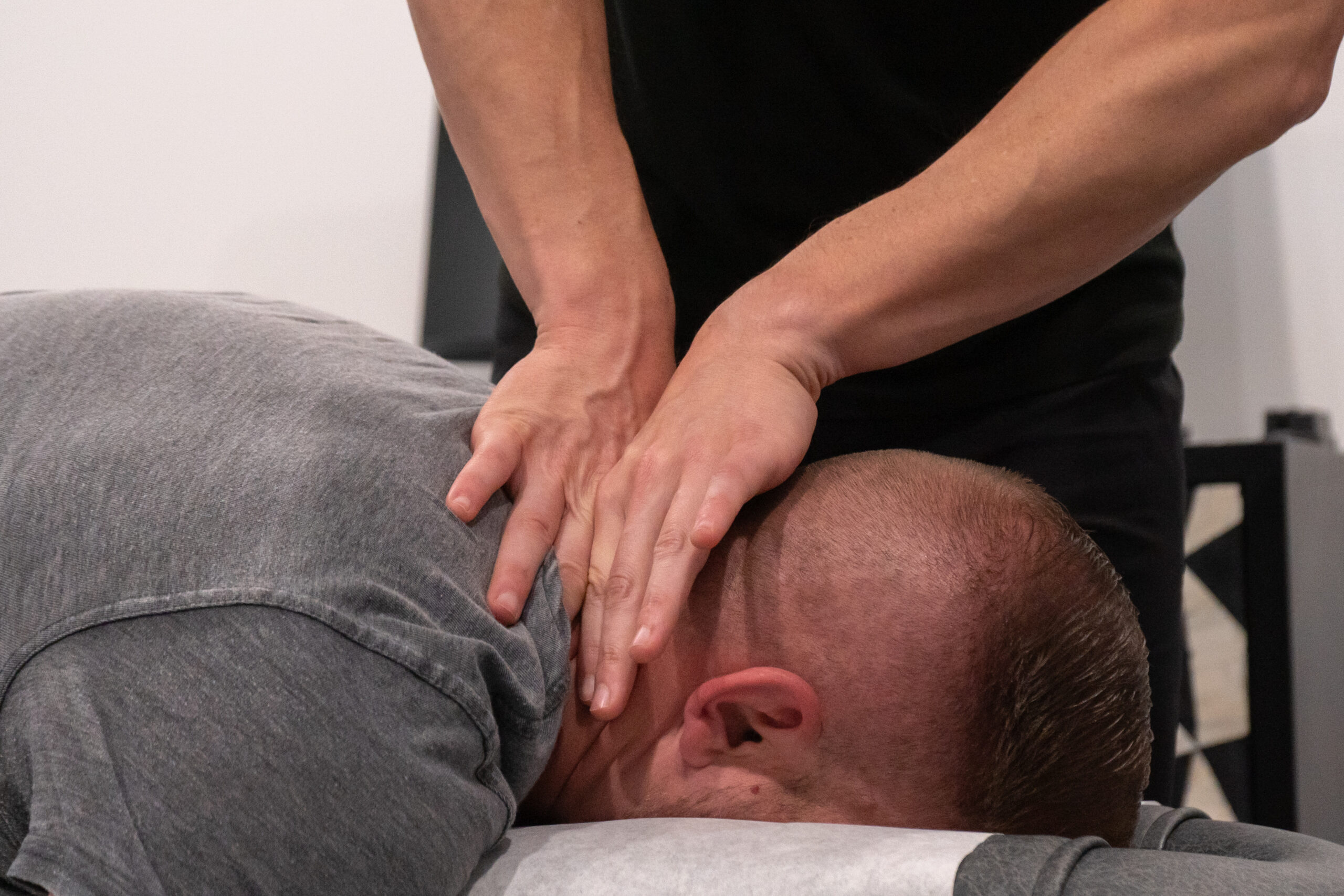
He then watches how your neck moves and examines the nearby muscles, joints, and soft tissues for stiffness, tenderness, or limited motion. This exam helps guide treatment for the neck. It is not used to diagnose the concussion.
What Does Chiropractic Care After a Concussion Look Like?
Care depends on what Dr. Tardio finds during the neck exam. Someone with tight, sore muscles may need a different approach than someone who mainly has stiff joints or trouble turning the head.
Treatment may include gentle chiropractic care to improve neck movement, hands-on therapy for tight or tender muscles, and guided exercises that support strength and control. The plan can change over time based on how the neck responds and how comfortably you can return to daily activities.
Concussion management should be directed by the appropriate medical providers. Dr. Tardio will work alongside the broader healthcare team when neck pain, stiffness, or other musculoskeletal concerns continue after a concussion.

When Medical Care Should Come First
Medical evaluation should come first when a concussion is suspected or has not yet been assessed. New, severe, or worsening symptoms may require urgent care rather than a chiropractic visit.
Call 911 or seek emergency medical care for a headache that gets worse and does not go away, repeated vomiting, seizure, weakness or numbness, slurred speech, one pupil larger than the other, increasing confusion, unusual behavior, loss of consciousness, or difficulty waking.
FAQs About Chiropractic Care After a Concussion
Can a chiropractor diagnose a concussion?
No. Dr. Tardio does not diagnose or medically manage concussions. His role is to treat neck-related problems that may have happened during the same injury. A suspected concussion should be evaluated by the appropriate medical provider.
Can chiropractic care help after a concussion?
It may help when the ongoing problem involves the neck. Care can focus on stiff joints, tight or sore muscles, limited movement, and headaches that seem connected to the neck. It is used alongside medical concussion care, not in place of it.
Why does my neck still hurt if my concussion is getting better?
The concussion and the neck injury may improve at different rates. Even as symptoms such as fogginess or light sensitivity begin to ease, the muscles and joints in the neck may remain sore or stiff from the original impact.
Is it safe to get chiropractic care after a concussion?
Chiropractic care may be appropriate after the concussion has been medically evaluated. Dr. Tardio reviews the injury and examines the neck before discussing treatment. If the symptoms suggest that another type of care is needed, he can coordinate with the appropriate provider.
What should I bring to my appointment?

Bring any records from the concussion evaluation, emergency visit, imaging, or sports and school guidance. It can also help to note when the neck pain began, which movements make it worse, and how it affects sleep, work, driving, or exercise.
Still Dealing With Neck Pain After a Concussion?
If your concussion has been medically evaluated but neck pain, stiffness, or limited movement continues, Dr. Kristopher R. Tardio, DC, can evaluate your neck and discuss whether chiropractic care may be an appropriate option. Call 732-720-2555 or request an appointment online.
If you experience severe or worsening symptoms after a head injury, seek emergency medical care immediately.