

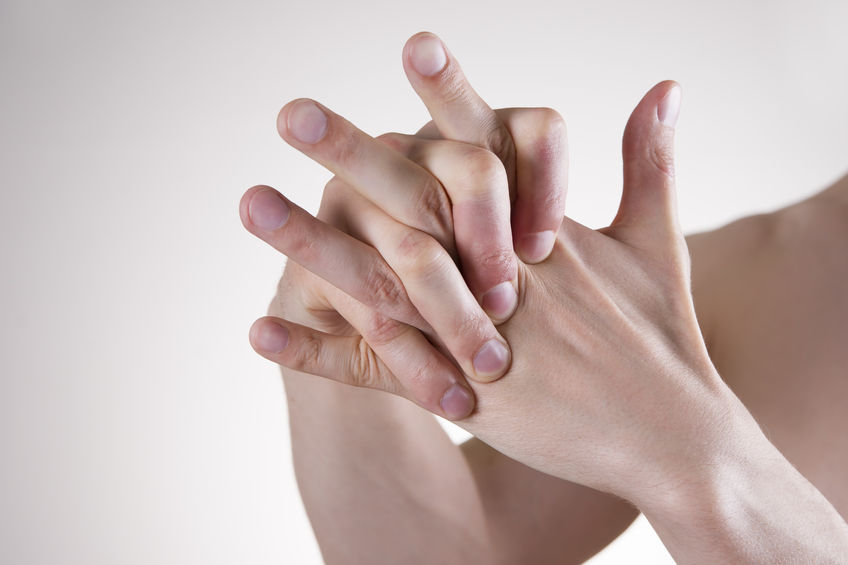
As far as durable bones go in the hand, the knuckles are by far the most resilient, but even the strongest of knuckles are susceptible to bruising. There are 27 bones and joints in the human hand, but how can you tell if you’ve bruised any of these?
Have you ever suffered a direct hit to your hand? Accidentally walking by a table and smacking it with your hand? A fracture or bruise can occur when you incur a direct hit against a hard surface.
Bruised Knuckle Symptoms
Bruised knuckles are common injuries we see as orthopedic sports medicine professionals and are most frequently found in people who participate in mixed martial arts, boxing, and baseball activities. But anyone can bruise a knuckle. Below are the symptoms to look for if you think you may have bruised your knuckles:
- Sharp pain after impact
- Trouble making a fist
- Painful movement when opening and extending hand
- Swelling
- Stiffness after impact
How to Know if your Knuckle is Broken or Bruised?
Like all other injuries, the best route to decipher if your knuckles are bruised is to see a qualified orthopedic specialist for an accurate diagnosis and treatment plan. A splint may be issued to keep the knuckle in a proper position during the healing process. Anti-inflammatory medication may be prescribed; there are also natural anti-inflammatories that can be ingested, such as turmeric and curcumin supplements and teas.
Frequently Asked Questions
How long does a bruised knuckle take to heal?
A bruised knuckle usually heals in about 1 to 3 weeks. A mild bruise may look and feel better within a few days, while deeper bruising with swelling or stiffness can take closer to a few weeks. Healing often takes longer if the hand is used constantly for gripping, sports, or manual work. If pain, swelling, or limited motion is not steadily improving, it may be worth getting checked to rule out a fracture or a tendon/ligament injury.
Does bruising your knuckles make them stronger?
No — bruising your knuckles does not make them stronger. A bruise is a sign of tissue trauma (small blood vessels breaking under the skin). Repeated impact to the knuckles can irritate the joint and soft tissues and may contribute to ongoing stiffness or discomfort over time.
How long does a bruised knuckle hurt?
A bruised knuckle commonly hurts for several days up to about two weeks. Pain is often most noticeable during the first few days, then gradually improves as swelling settles and the bruise fades. It may still feel sore with pressure, bending, or gripping while the tissues recover. If the pain is severe, worsens, or doesn’t improve after about two weeks it may be something beyond a bruise.
Can arthritis cause bruised knuckles?
Arthritis doesn’t typically cause bruising by itself, but it can make the knuckles more sensitive and inflamed, which may make bruising more likely after minor bumps. Some people with arthritis also have swelling and skin changes around the joints that can make discoloration look like bruising. If bruising happens repeatedly without a clear injury, or if it comes with significant swelling, warmth, or increasing stiffness, it’s a good idea to get evaluated to identify the cause and rule out other issues.
Next Steps for Knuckle Injuries
Dr. Edward Armbruster is a board-certified orthopedic surgeon who is fellowship trained in hand and microvascular surgery. He practices at Advanced Orthopaedics and Sports Medicine Institute (AOSMI), where patients can receive care for a wide range of bone, joint, and sports-related conditions.
If you have knuckle pain that isn’t improving, swelling that persists, or difficulty making a fist, you can request an appointment with Dr. Edward Armbruster at AOSMI to discuss your symptoms and next steps.