

What’s New at AOSMI
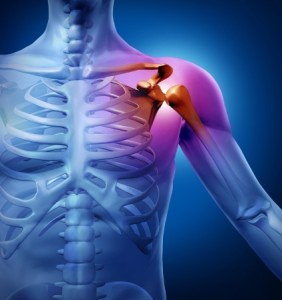 “Hey Doc, how come you’re prescribing antibiotics for me prior to dental work, when my dentist told me that is an old practice?”
The use of antibiotics as prophylaxis, disease prevention agent, prior to dental work on patients after a total joint replacement (TJR), has been an issue of confusion among patients, doctors and dentists. Traditionally, orthopedic surgeons recommend coverage with antibiotics to prevent prosthetic joint infection (PJI). The concept is to counteract the introduction of bacteria when it enters the blood stream or Bacteremia. The incidence of PJI is between 1% to 3% depending on the type of study you read. PJI can be very devastating if it occurs and may lead to loss of limb or life.
In 2003, the American Dental Association (ADA), and the American Academy of Orthopedic Surgeons (AAOS) had a conference on the issue and made a recommendation to use antibiotic prophylaxis for 2 years following a total joint replacement. It was to be given orally or intravenously, within 1 hour of the procedure.
In 2009, The AAOS changed the 2003 recommendation stating that the coverage should be lifetime. Because of the concern of the medical community regarding resurgence of antibiotic resistant organisms, and because evidence based medicine showed lack of correlation between bacteria found in the mouth and bacteria that is commonly gown in PJI, another meeting was convened.
The common organisms found in PJI are Staphylococcus Aureus, MRSA and Staphylococcus Epidermidis. These organisms are not commonly found in the mouth.
In 2012, the ADA and AAOS, together with epidemiologist and infectious disease specialists, met again and came out with the following recommendation, “the practitioner might consider discontinuing the practice of prescribing prophylactic antibiotics.” The statement seems to be inconclusive and weak, leaving the decision upon the dentist, orthopedist and confused patient.
How did I resolve the issue?
My patient happens to have Rheumatoid Arthritis and Type I Diabetes, definitely a high risk for infection of any kind, any source. If I advised no antibiotic prophylaxis and he got infected, there is no evidenced based medicine type of explanation I can give to this patient that will sound credible to him.
All he knows is he got infected because the two professionals he relied upon failed him. He is high risk to begin with and should be covered from wherever the bacteremia will come from. A single dose of Cephalexin will not cause havoc to his bacterial flora.
My further recommendations for prophylaxis, dental or otherwise (Minor or Major surgeries, biopsies, colonoscopy or any procedure that may draw blood) would be, coverage if you belong to this group:
A. Immunocompromised/immunosuppressed, including: Inflammatory arthropathies: Rheumatoid Arthritis (RA), Systemic Lupus Erythematosus (SLE, Lupus), drug or radiation induced immunosuppression
B. Other high-risk patients:
Type 1 Diabetes
Prior PJI
Malnourished state (post TJR)
Hemophilia
First 2 years following TJR, (again empirical and not evidence based)
Suggested antibiotic regimen: Cephalexin1 gram, Amoxillin 2 grams 1 hour prior to procedure, can be given intravenously.
Penicillin allergy: Clindamycin 600 mg orally 1 hour prior to the procedure.
No second dose recommended even if the procedure is prolonged.
Manuel T Banzon MD FAAOS
04/29/2015
 Worldwide, over 1.2 million total joints are being done each year. Approximately, 800,000 of these total joints are done in the US alone. Americans are therefore the biggest consumers of this very successful technology.
Traditionally, TJR is done in a hospital set up because most patients undergoing TJR are the elderly with medical comorbidities (the presence of other illness like Hypertension, Heart Disease, uncontrolled Diabetes etc).
The current generation of baby boomers however, are much healthier, live a longer life and tend to stay active at an older age. On the other hand, a lot of younger patients are having TJR because of damage to the joints at an early age caused by sports related injuries.
Improved perioperative anesthesia, development of new analgesics like Exparel, and the increasing sophistication and safety of Surgicenters, prompted the development of outpatient TJR. Approximately, 20 percent of TJR are now done safely, expediently and at a big savings to the insurance company at surgicenters. The recovery time is shortened, infection rate is cut down, certain institutions like the Northern Monmouth Surgicenter in Manalapan NJ, where I do most of my outpatient work is close to zero percent.
There are certain reasons why TJR cannot be done in an outpatient setup. Medicare and certain private insurance companies will not authorize the TJR to be done as outpatient. It is my belief that the insurance companies will eventually see the value of doing outpatient TJR.
Any surgical patient with a severe medical condition obviously should be done in a hospital setup.
Examples of TJRs being performed in a Surgicenter, Total Hip Replacement (THR), Total Knee Replacement (TKR), Total Shoulder Replacement (TSR), Reverse Total Shoulder Replacement ( rTSR), Total Ankle Replacement (TAR) If you have any questions regarding surgery in an outpatient setup, please call for in office consultation.
Manuel T Banzon MD FAAOS
04-20-2015
 Turf toe, or sprain of the first metatarsal phalangeal joint (MTP), can be one of the most painful and debilitating injuries an athlete can face. The condition was originally described in 1976 by Bowers and Martin at the University of West Virginia, where they noted an average of 5.4 turf toe injuries per season among football players. 1 In 1990, Rodeo et al reported on professional football players in the National Football League2 and found that out of 80 active players, 45 percent had suffered turf toe injuries in their professional careers, with 83 percent occurring on artificial turf
READ MORE
FREEHOLD, NJ, February 4, 2015 — Advanced Orthopedics and Sports Medicine Institute (AOSMI) is announcing its latest achievements in doctor ratings and patient reviews, including multiple perfect scores from ratings sites. In addition to the many patient ratings that rank AOSMI professionals as the top New Jersey orthopedic surgeons, the practice’s doctors have also achieved distinction across all medical specialties.
AOSMI has been at the forefront of the field since its founding, enjoying the top ratings in the area for orthopedic specialists. The practice’s latest achievements further distinguish AOSMI as the foremost authority in orthopedics for its region. On Healthgrades, a major online resource aggregating patient ratings for leading doctors, AOSMI professionals occupy all five of the top spots for Healthgrades’ listings for orthopedics in Freehold, NJ, and every doctor who has been practicing with AOSMI for more than a year rates in the top 10 orthopedic surgeons in the area. All of the doctors on staff at AOSMI enjoy star ratings of 4 and above, with two professionals honored with 5-star ratings. These perfect scores belong to Alan S. Nasar, MD, FAAOS, a fellowship-trained orthopedic surgeon specializing in joint replacement surgery, and Alison DeWaters, DPM, a board-certified specialist in foot and ankle surgery.
RateMDs, another popular site patients use to locate and review medical professionals, lists two of AOSMI’s leading professionals among the top 10 doctors in Freehold, NJ, across all specialties. These doctors are Dr. Nasar and Michael J. Greller, MD, FAAOS, a fellowship-trained expert in sports medicine. Representative of the entire practice’s commitment to quality care, these two doctors have earned accolades that further illustrate AOSMI’s professional standards. AOSMI is proud to announce these latest high ratings in patient satisfaction and dedicated to improving on the remarkable success they indicate with every patient interaction.
To learn more about AOSMI’s orthopedic specialists, prospective patients can visit http://www.aosminj.com, or call 732-720-2555. The practice is also active on social media, including Facebook at http://www.facebook.com/AdvancedOrthoSports and Twitter at http://twitter.com/OrthopedicsNJ.
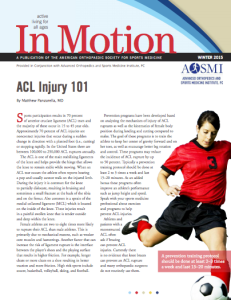 Sports participation results in 70 percent of anterior cruciate ligament (ACL) tears and the majority of these occur in 15 to 45 year olds. Approximately 70 percent of ACL injuries are noncontact injuries that occur during a sudden change in direction with a planted foot (i.e., cutting) or stopping rapidly. In the United States there are between 100,000 to 250,000 ACL ruptures annually.
The ACL is one of the main stabilizing ligaments of the knee and helps provide the hinge that allows the knee to remain stable while moving. When an ACL tear occurs the athlete often reports hearing a pop and usually cannot walk on the injured limb. During the injury it is common for the knee to partially dislocate, resulting in bruising and sometimes a small fracture at the back of the tibia and on the femur. Also common is a sprain of the medial collateral ligament (MCL) which is located on the inside of the knee. These injuries result in a painful swollen knee that is tender outside and deep within the knee.
READ MORE