
What’s New at AOSMI
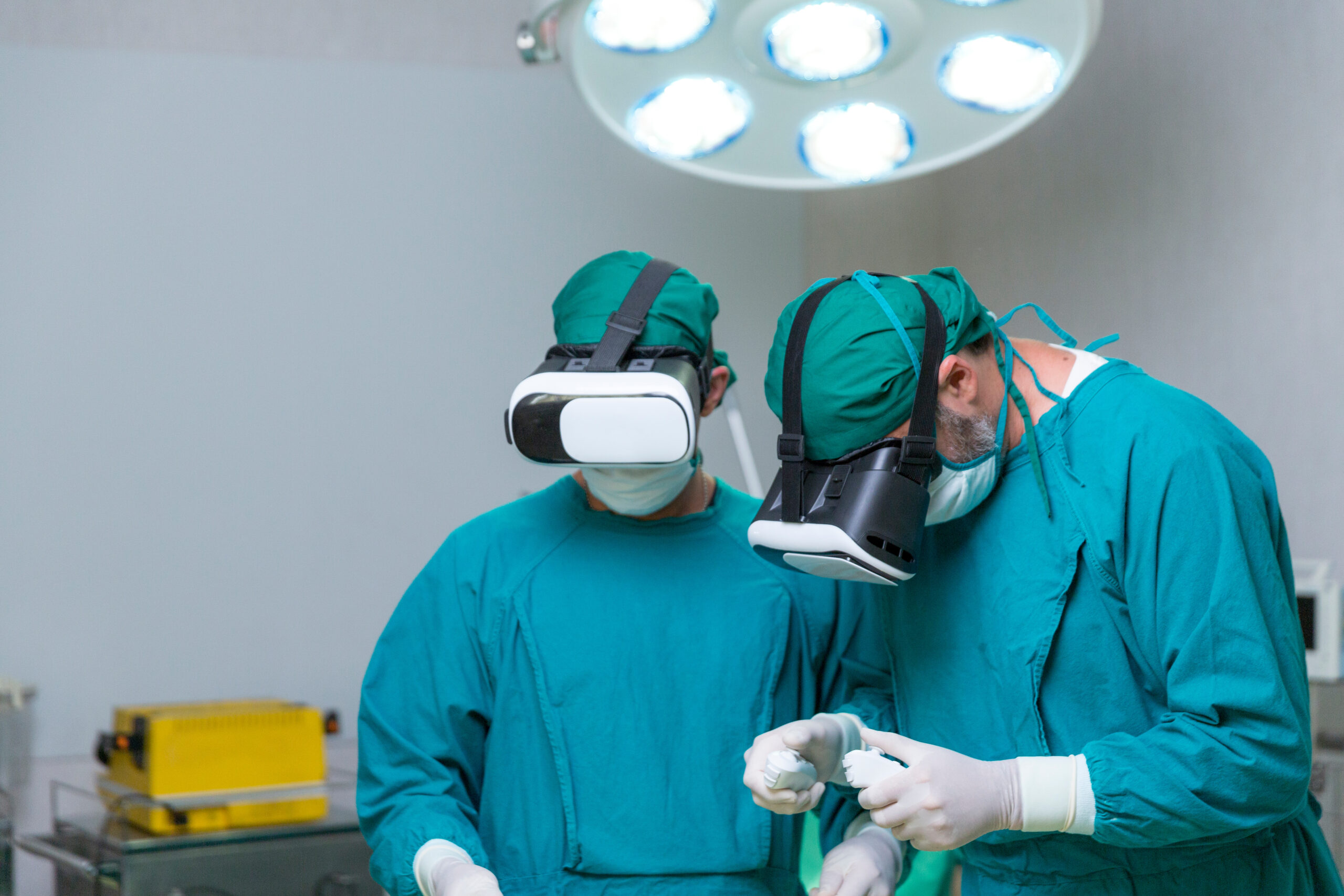
Dr. Joseph Tauro, a nationally recognized orthopedic surgeon, recently presented his groundbreaking research on augmented reality (AR) training for arthroscopic surgery at the Military Advanced Surgical Training (MAST) symposium. His research represents a major step forward in surgical training, setting the stage for transformative advancements in medical education and patient care.
As AR technology continues to revolutionize industries worldwide, its application in orthopedic surgery offers unparalleled potential. Dr. Tauro’s research focuses on how AR can improve the precision, efficiency, and safety of arthroscopic procedures by providing surgeons with an innovative, immersive tool to enhance their skills. His work highlights his commitment to advancing orthopedic surgery and shaping the future of medical training.
Advancing Surgical Training with Augmented Reality
The integration of augmented reality into arthroscopic surgery has the potential to revolutionize how surgeons learn and perform procedures. By using AR technology, surgeons can:
- Simulate complex surgeries in a risk-free environment.
- Visualize detailed, real-time, 3D representations of anatomical structures.
- Receive interactive guidance and feedback during virtual surgeries.
For example, during an AR training session, a surgeon could practice shoulder repair techniques while seeing an overlay of the patient’s anatomy, complete with annotations and step-by-step instructions. This creates a more dynamic, hands-on experience compared to traditional methods like textbooks or static simulations. The immersive nature of AR helps bridge the gap between theoretical knowledge and real-world application, accelerating the learning curve for new surgeons.
Dr. Tauro’s research positions him at the forefront of this exciting field, setting a new standard in surgical education. His work empowers future surgeons to refine their skills with unprecedented precision and prepares them to deliver improved outcomes for patients.
 About Dr. Joseph Tauro
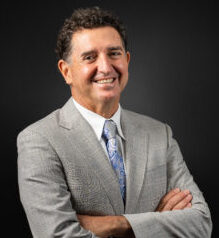
Dr. Joseph Tauro is a board-certified orthopedic surgeon and nationally recognized provider for in shoulder injuries, sports medicine, and degenerative joint disorders. A Master Instructor and Board Member of the Arthroscopy Association of North America (AANA), Dr. Tauro is renowned for developing innovative techniques in minimally invasive joint replacement and arthroscopic surgery.
As a Professor of Orthopedic Surgery at Rutgers Medical School, Dr. Tauro trains the next generation of surgeons while contributing extensively to orthopedic research through publications and lectures. In 2023, he joined AOSMI, bringing his skills to eight locations across New Jersey to provide top-tier orthopedic care.
Award winning physician
Dr. Tauro has been the recipient of many awards throughout his career and also recently received an award from the Veterans of Foreign Wars in sincere appreciation and recognition of his service. With 35 years of experience as a VA surgeon, his dedication to advancing medical education and patient care has left an indelible impact on both the military and civilian medical communities.
Driving the Future of Surgical Training
Dr. Tauro’s presentation at the MAST symposium marks a significant milestone in his work with augmented reality in arthroscopic surgery. By continuing to refine and expand his research, he remains at the forefront of integrating cutting-edge technology into medical training. His dedication to innovation supports both surgeons and patients in benefitting from the enhanced precision and outcomes that AR technology enables.
Contact Dr. Tauro Today

Are you curious about the latest advancements in orthopedic care or interested in learning how cutting-edge technologies like augmented reality are shaping surgical training?
Contact Dr. Tauro and the AOSMI team to explore how innovative solutions can address your orthopedic needs.

Celebrate the season while supporting a great cause! Join AOSMI and the Arthritis Foundation for the 40th annual New Jersey Jingle Bell Run on December 7, 2024, at Bell Works in Holmdel, NJ. Your donations help raise funds for arthritis research, treatments, and resources that change lives.
Click here to learn more and get involved!
Help AOSMI and the Arthritis Foundation Make a Difference at the New Jersey Jingle Bell Run 2024
Support Arthritis Awareness, Research, and Care with Your Donations
This holiday season, join Advanced Orthopedics and Sports Medicine Institute (AOSMI) and the Arthritis Foundation (AF) for the 40th annual New Jersey Jingle Bell Run, a festive charity event dedicated to fighting arthritis. Taking place on Saturday, December 7th, at 9 AM at Bell Works in Holmdel, NJ, this event raises vital funds for arthritis research, innovative treatments, and life-changing resources.
Whether you’re running, walking, or supporting from the sidelines, your contributions will make a meaningful impact in the lives of those affected by arthritis.
Why Your Donations Matter
The Arthritis Foundation uses your contributions to:
- Fund Breakthrough Research: Advance studies aimed at preventing and curing arthritis.
- Improve Patient Care: Develop cutting-edge treatments to enhance mobility and quality of life.
- Provide Life-Changing Resources: Deliver tools, guides, and support programs to help individuals manage arthritis.
- Expand Access to Services: Support physical therapy, educational workshops, and local programs.
- Strengthen Advocacy Efforts: Champion policies that improve access to care and prioritize arthritis research funding.
Your support fuels hope and progress for millions living with arthritis.
How to Get Involved
- Donate Today: Every contribution matters! Visit Jingle Bell Run NJ 2024 Donation Page to make a difference.
- Join a Fundraising Team: Gather your network to maximize your impact and support this important cause.
- Become a Sponsor: Businesses can play a key role in amplifying our reach while making a significant contribution.
Make an Impact at the 2024 New Jersey Jingle Bell Run
For over 40 years, the Jingle Bell Run has united communities in the fight against arthritis. This year, we’re continuing the tradition, and with your help, we can expand our reach and make a greater impact.
Here’s why this event matters:
- Over 58 Million Americans Live with Arthritis: Donations support solutions that enhance mobility and quality of life.
- Arthritis Affects All Ages: From children to seniors, your generosity supports people at every stage of life.
- Together, We Can Change Lives: Every dollar contributes to advancing care, driving innovation, and offering hope.
Ready to Join the Cause?
- Donate Today: Visit Jingle Bell Run NJ 2024 Donation Page
- Register or Fundraise: Learn more at Jingle Bell Run NJ 2024.
This holiday season, let’s jingle for a brighter future! Your generosity brings us closer to a cure and makes a lasting difference in the lives of those affected by arthritis.
Thank you for your support—together, we’re making a meaningful impact!
Exceptional Care for Hand and Upper Extremity Conditions
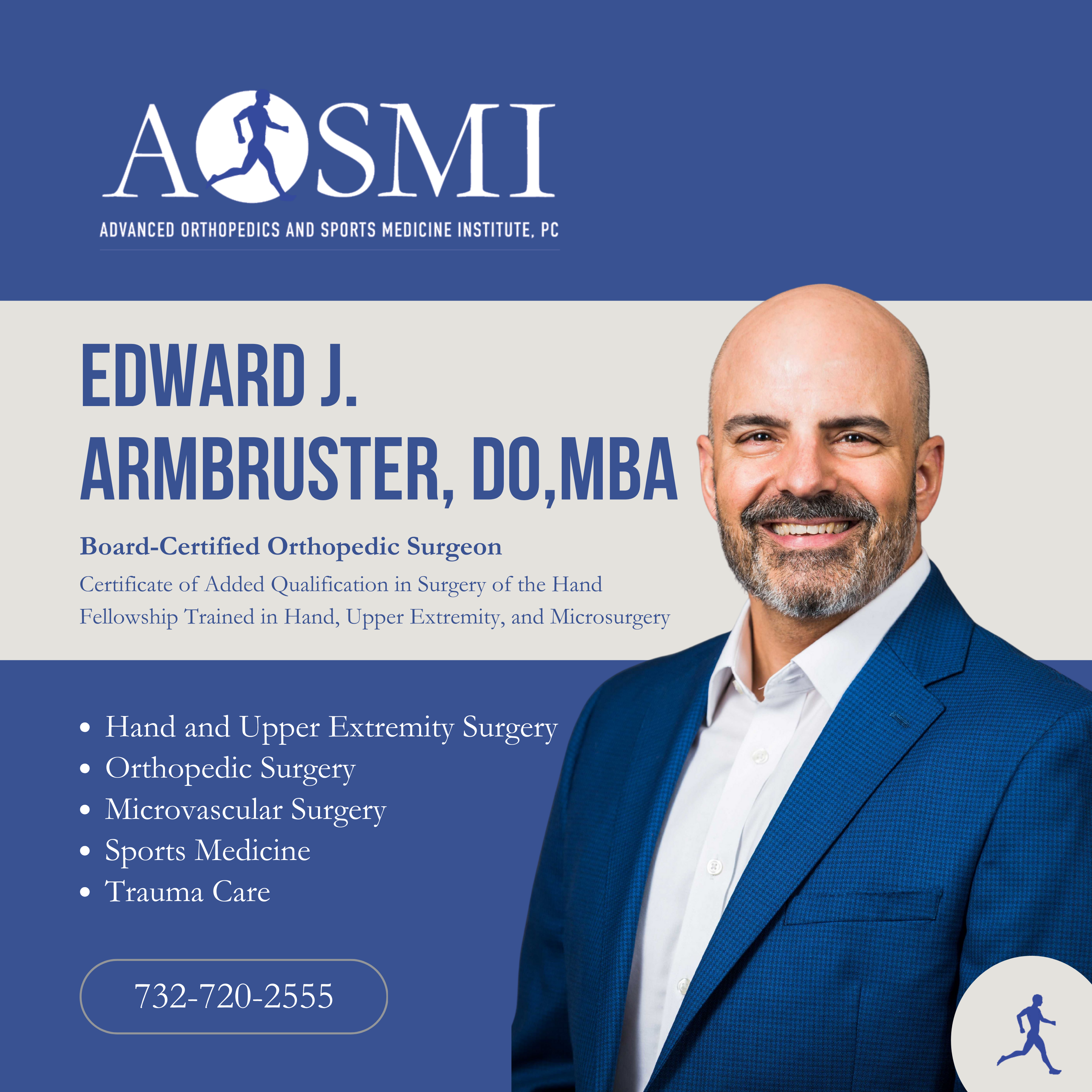
Advanced Orthopedics and Sports Medicine Institute (AOSMI) proudly announces the addition of Dr. Edward J. Armbruster, DO, MBA, CAQSH, CAQSM, to our team. Patients across New Jersey can now benefit from Dr. Armbruster’s specialized care in hand and upper extremity surgery, sports medicine, and microvascular procedures.
Meet Dr. Edward J. Armbruster
Dr. Armbruster is a distinguished orthopedic surgeon, specializing in treating conditions affecting the hand, wrist, elbow, and upper extremities. With advanced training, including a fellowship in Hand and Microvascular Surgery at Rutgers Health – New Jersey Medical School, Dr. Armbruster uses innovative techniques to restore mobility and improve patients’ quality of life.
Whether addressing traumatic injuries, sports-related conditions, or chronic disorders, Dr. Armbruster is dedicated to providing tailored care for each patient.
Comprehensive Hand and Upper Extremity Services
Dr. Armbruster offers a wide range of treatments to address various hand and upper extremity issues, including:
Hand and Wrist Surgery
- Treatment for fractures, tendon injuries, arthritis, and carpal tunnel syndrome.
Elbow Surgery
- Expert care for conditions like elbow instability, tennis elbow, and trauma-related injuries.
Microvascular Surgery
- Advanced procedures for complex injuries involving nerves and blood vessels.
Sports Medicine
- Focused treatment for upper extremity sports injuries, helping athletes recover and return to peak performance.
Every treatment plan is customized to meet the unique needs of the patient, ensuring efficient recovery and optimal results.
Award-Winning Leadership in Orthopedic Care
Dr. Armbruster is recognized as a leader in orthopedic surgery, with accolades that include:
- 2022 Leadership Award from the New Jersey Association of Osteopathic Physicians and Surgeons
- 2023 Suburban Life Magazine Top Physician
- Numerous recognitions as a Top Physician
His dedication to advancing orthopedic care extends to research, education, and patient-centered practice.
Convenient Locations Across New Jersey
Dr. Armbruster is now accepting new patients at AOSMI’s Freehold, Toms River and Monroe locations. These convenient offices ensure easy access for individuals seeking relief from hand pain, wrist injuries, or upper extremity conditions.
If you’re dealing with a sports injury, seeking treatment for chronic pain, or need a second opinion, Dr. Armbruster and the AOSMI team are here to help.
Schedule a Consultation Today
Schedule an appointment with Dr. Edward J. Armbruster at AOSMI and take the first step toward restored mobility and a better quality of life. Contact us today to learn more about our comprehensive orthopedic services.
Advanced Orthopedics and Sports Medicine Institute (AOSMI) is honored to announce the newly elected leadership of the Orthopedic Department at CentraState Medical Center. We congratulate Dr. Eric Buxbaum and Dr. Michael Greller, both of AOSMI, on their appointments to key leadership roles.
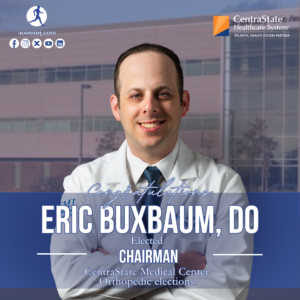
Dr. Eric Buxbaum, Chairman of the Orthopedic Department
Dr. Eric Buxbaum of AOSMI has been elected as the Chairman of the Orthopedic Department. Dr. Buxbaum has played a pivotal role in advancing orthopedic care, focusing on modern treatment approaches and improving patient outcomes. His leadership is expected to drive continued growth and innovation, benefiting patients in Freehold, NJ, and at CentraState Medical Center.
For more information about Dr. Buxbaum, visit his full profile.
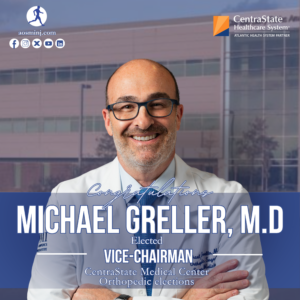
Dr. Michael Greller, Vice-Chairman of the Orthopedic Department
Dr. Michael Greller of AOSMI has been elected as the Vice-Chairman of the Orthopedic Department. Dr. Greller has made significant contributions to enhancing patient care and improving departmental operations. His dedication reflects the high standards of care that patients expect from AOSMI and CentraState Medical Center.
Learn more about Dr. Greller’s role and background by visiting his full profile.
AOSMI: Advancing Orthopedic Leadership
The election of Dr. Buxbaum and Dr. Greller highlights the dedication of AOSMI and CentraState Medical Center to delivering exceptional orthopedic care. Their leadership fosters a culture of excellence and innovation within the Orthopedic Department at CentraState Medical Center in New Jersey, guiding the department in improving health outcomes for the communities it serves.
About AOSMI
Advanced Orthopedics and Sports Medicine Institute (AOSMI) offers comprehensive orthopedic and sports medicine services, dedicated to improving patient outcomes. Serving communities throughout New Jersey, AOSMI is committed to advancing healthcare through innovation and leadership.
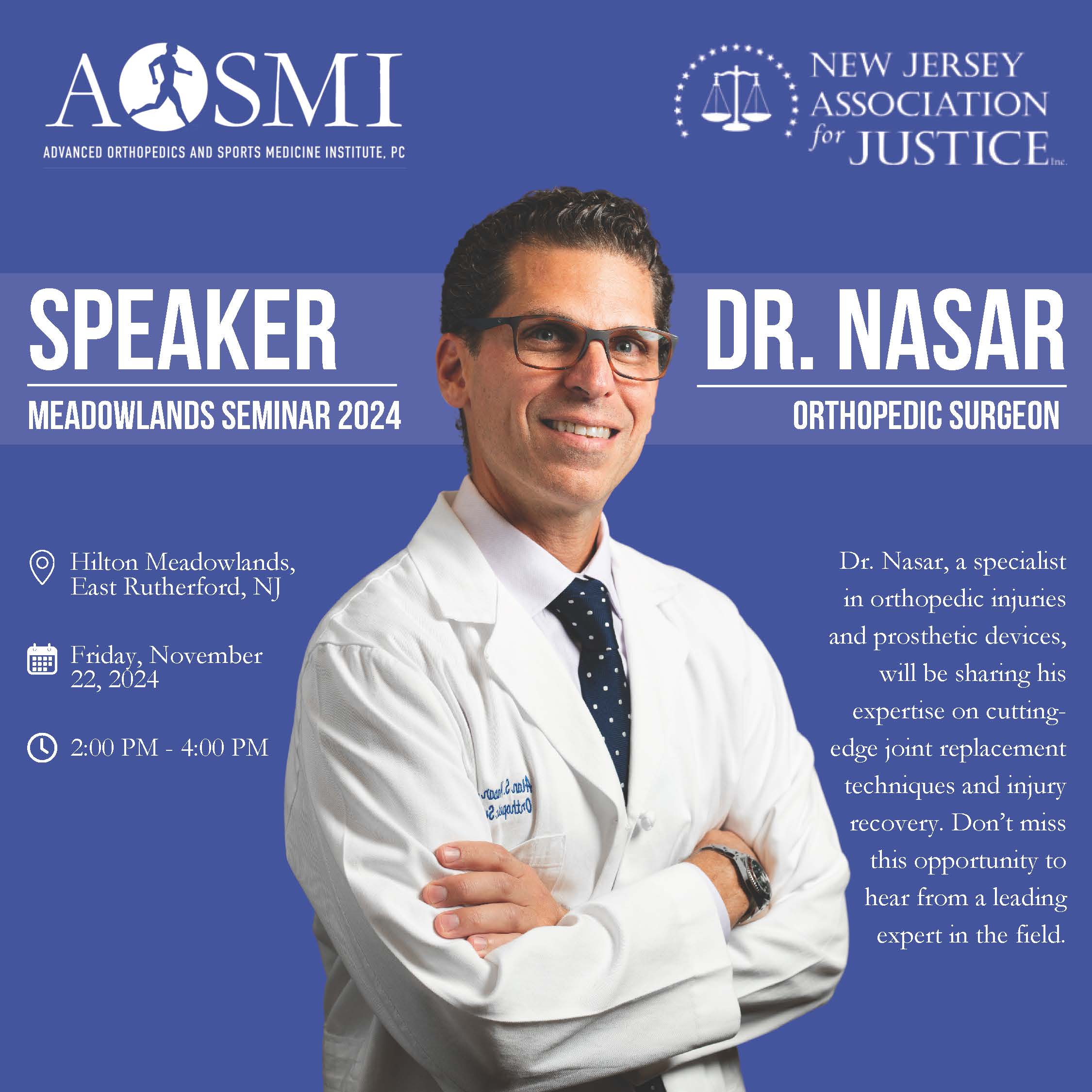
Introduction to NJAJ Meadowlands Seminar 2024
We are thrilled to participate in the NJAJ Meadowlands Seminar 2024, a crucial event for trial attorneys aiming to enhance their practice, earn continuing legal education (CLE) credits, and network with peers. This event will take place from November 20-22, 2024, at the Hilton Meadowlands in East Rutherford, NJ. Attendees will have the chance to connect with leaders in law, medicine, and professional services.
Dr. Alan Nasar’s Session at the Meadowlands Seminar
We are excited to announce Dr. Alan Nasar, a distinguished orthopedic surgeon from AOSMI, will present on November 22nd, from 1:15 pm to 2:15 pm. His session, titled “Aggravation of Pre-Existing Conditions and Objectively Establishing Aggravation/Acceleration”, will delve into establishing medical evidence in cases involving pre-existing conditions.
Dr. Nasar’s session will be invaluable for attorneys involved in personal injury and medical malpractice cases, providing essential knowledge that can be directly applied in their legal practice.
Learn More About Dr. Alan Nasar
Dr. Alan Nasar is a renowned orthopedic surgeon at Advanced Orthopedics and Sports Medicine Institute (AOSMI). He is known for his innovative approach in minimally invasive joint replacement surgery and computer-assisted surgery, which aids in precise joint implant placement. As the Chair of Orthopedic Surgery at CentraState Medical Center in Freehold, NJ, Dr. Nasar focuses on enhancing patient outcomes and reducing recovery times.
Why You Should Attend
The NJAJ Meadowlands Seminar is an excellent opportunity for trial attorneys to gain over 21.90 MCLE credits, including 8.10 Ethics credits and 5.50 credits in Diversity, Inclusion, and Elimination of Bias. With more than 22 expert-led programs, this event is pivotal for advancing the skills of plaintiff trial attorneys.
By attending, you will gain critical insights, especially from medical experts like Dr. Nasar, that are crucial for managing pre-existing injury claims.
Event Details
- Date: November 20-22, 2024
- Location: Hilton Meadowlands, East Rutherford, NJ
- Dr. Nasar’s Session: Friday, November 22nd, 1:15 pm – 2:15 pm
For more details and to register for the seminar, please visit the NJAJ Meadowlands Seminar Registration page.